
Published Date: March 12, 2026
When AI Overviews started rolling out and AI search engines became part of everyday life, it quickly became obvious that “classic SEO” wasn’t enough anymore.
I was returning to SEO work after a few years away focusing on social media and graphic design in marketing, leaving me skeptical and unsure which tactics still mattered and which were outdated.
Taking the Discover AIO AI SEO Leadership Blueprint: Command Rankings, Drive Success course gave me both a refreshed foundation in modern SEO and a clear playbook for AI search optimization that I could apply immediately in client work.
Now I approach every campaign with one question: “How do I make this content easy for both humans and large language models to understand, trust, and cite?” That mindset shift, grounded in the course, has already helped my content outperform even government websites on high‑intent topics.
Contents
- From Skeptic to AI SEO Practitioner
- The Big A‑Ha: AI Search Optimization, Not Just Rankings
- Technical SEO Foundations That Actually Matter Now
- A Concrete Win: Outperforming Government Sites
- Tools, Workflows, and Automation Upgrades
- Why This AI SEO Course Is Worth It
- What you will learn in practical terms
- Quick verdict for people searching for an AI SEO course review
- Ready to get started with AI SEO?
From Skeptic to AI SEO Practitioner
I learned SEO years ago, when keyword lists and blue links dominated. I thought alt text was cutting edge still – and my colleagues at Xponent21 gave me a big wake up call.
I needed a course that could bridge the gap between traditional SEO and AI Overviews in a practical way. The best part about this course from DAIO was how actionable and current the program was, especially in how it integrated AI systems like ChatGPT and Perplexity into everyday SEO workflows.
My full review and reflection goes into my personal shift: knowing the future of search was changing and the step‑by‑step breakdown of what to implement. This course gave me a clear roadmap that goes well past the keyword tactics I had seen in my training from years ago.
If you are searching for an honest AI SEO course review, this post explains what the course teaches, why it works, and how you can start learning AI SEO today.
The Big A‑Ha: AI Search Optimization, Not Just Rankings
One of my biggest a‑ha moments was realizing that “AI SEO” isn’t just about ranking in ten blue links on the search query page — it’s more important to become the source AI systems pull from when they answer user questions.
This course laid out how AI Overviews, conversational engines, and semantic search work together and what kinds of content structures they favor: concise, clearly scoped explanations, strong E‑E‑A‑T content, and schema classifications that makes relationships between ideas explicit for the minds of bots.
Instead of chasing a long list of individual keywords, I now build topic‑centric resources that map to user intent across the journey—awareness, consideration, decision—while also making answers easy to quote in AI responses. That shift from “keyword stuffing” to “information architecture for AI” is one of the most valuable changes in how you think about SEO today.
Technical SEO Foundations That Actually Matter Now
Another key piece of understanding this realm of the internet was reconnecting with technical SEO, this time through the lens of AI.
The course reinforced that fundamentals like crawlability, mobile‑first performance, Core Web Vitals, and HTTPS are no longer optional hygiene tasks; they directly influence how well AI systems can access, parse, and trust your content.
I walked away with a clear checklist of things to check on the back end of any website: site structure for strength, internal links for crawlers and AI, site speed and mobile UX, and schema types – just to name a few important pieces of the technical puzzle.
For someone returning to SEO after a few years away, this made the technical side feel much less abstract and much more tied to real-world outcomes.
Making Content Accessible to LLMs
Sorry not sorry to break the news here: content isn’t actually meaningful if the information isn’t accessible. Thankfully, LLMs can help dredge up information on just about anything – so you’ve got to make it easy for them to do so.
The Blueprint course taught me to think about content in layers: the human-readable story on the surface, and beneath it, an intentional structure of headings, bullets, tables, and schema that AI can parse quickly and reliably.
Now when I write or edit a page on a website, I intentionally:
- Break out tightly scoped questions and answers that map to how users phrase queries
- Use clear, descriptive headings and short sections that can be lifted into snippets or Overviews
- Add FAQ and related schema to signal common questions, definitions, and step‑by‑step processes
This approach has led to more frequent and more consistent appearances in AI Overviews for my agency’s clients, which we can see increasing over time as I continue refining their content.
A Concrete Win: Outperforming Government Sites
The clearest proof that this methodology works came when I applied it to a high‑intent topic for Pool Brokers USA: pool permits.
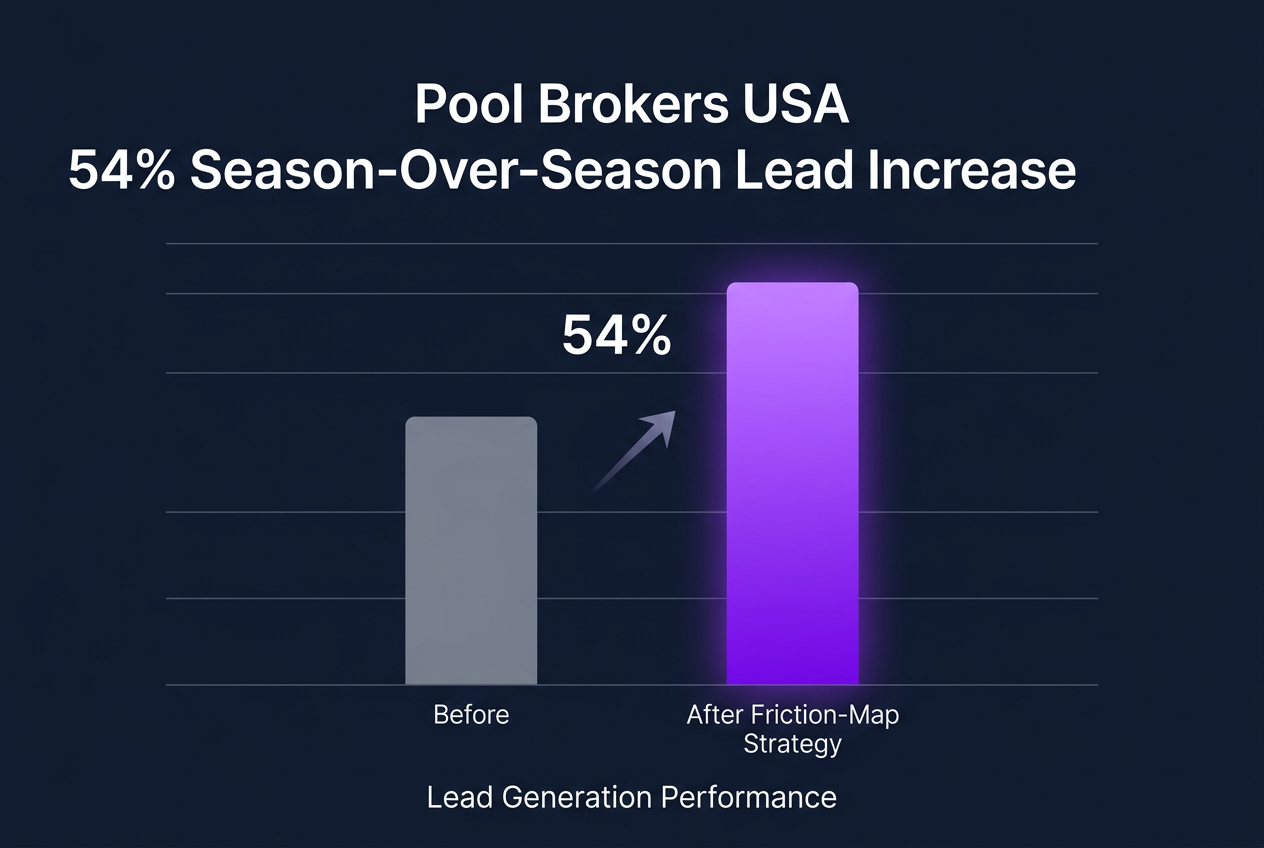
Traditionally, government sites dominate queries around permits and regulations – that should be obvious. But we’ve all been on a government-built website before – many of them leave a lot of UX to be desired. Files are buried within sub-structures, which ultimately makes the user journey for someone seeking out pool permits very segmented and involved. It should be as easy as getting your documents, getting the tips that you need to fulfill inspections, and knowing the steps to take next when you’ve got your permit application submitted.
By following the course’s blueprint, I built a structure of content page that outperformed those official sources for the exact questions real people were asking.
We didn’t beat the system with tricks. We supported and outranked for specific queries by:
- Organizing all the scattered permit information and links into one coherent, user‑focused resource
- Structuring the content with clean headings, tables, and FAQs that AI could easily summarize
- Aligning the page with clear search intent and providing genuinely more helpful guidance than the original documents
The result comes in higher SEO rankings, and even more importantly, it lives on the very top of the search page – in the AI overview. When users desperately want clarity on a large financial decision like pool installation and the documents necessary to make that investment, our client shows up in that time of need. And it’s all because of the principles I learned in the AI SEO course that need can be met.
Tools, Workflows, and Automation Upgrades
Another benefit of the course was seeing how I could turn AI SEO into repeatable workflows instead of only one‑off experiments and micro-strategies like I did with the hyperspecific state-oriented pool permit content.
My team started using an ecosystem of tools: keyword research platforms, AI‑assisted writing tools, technical crawlers, and overview/citation trackers to monitor where our content shows up in AI experiences and how that changes as you optimize. Still, it was the human expertise I provided on this project that really helped our content soar above with flying colors.
We also began automating repetitive tasks: scheduled site audits, automated alerts when rankings or AI citations change, and streamlined reporting around performance metrics that actually matter in an AI‑heavy search landscape. Scaling our tech stack and resources like this has had a huge pay-off. My team saves time while still increasing how visible our clients are across both classic SERPs and AI-driven results.
Why This AI SEO Course Is Worth It
There are a few AI SEO learning opportunities on the market now, but what made the Discover AIO Blueprint course stand out for me was the combination of human‑centric strategy, up‑to‑date tactical depth, and a real-world focus on AI search behavior.
I already knew AI was changing the game of search. But what I didn’t know was how to adapt. Thanks to the certification I earned, I’ve gotten so much better with modern keyword strategy, diverse technical setups, content structure, internal linking, and authority signals so AI systems actually choose my content when answering users.
If you’re a marketer, SEO pro, or beginner trying to figure out how to learn AI SEO in a way that translates into client wins, this program offers a clear, tested path.
I went in skeptical and rusty. I came out with a playbook and immediate results.
What you will learn in practical terms
The course is organized into readable modules with video, annotated notes, and hands on projects. Here is what each module gives you at a glance.
| Module | Focus | What you walk away with |
| Module 1 | Human centered approach | How to shape content and UX so both people and AI prefer your page |
| Module 2 | Foundations of modern SEO | Topic mapping, internal linking, buyer journey and content architecture |
| Module 3 | Technical SEO for AI | Speed, crawlability, Core Web Vitals, JSON LD snippets and validation steps |
| Module 4 to 7 | Tools, workflows, projects | Tool based workflows, automation templates and citation tracking for AI Overviews |
Quick verdict for people searching for an AI SEO course review
If you want a practical, hands-on path into AI search optimization, this course will get you there. It blends human-centered strategy, technical foundations, and repeatable workflows.
The lessons are short, actionable, and backed by tactics you can apply right away for any website. For beginners, the training explains the basics in plain language. For experienced marketing professionals, it gives modern patterns to win placements in AI Overviews and LLM responses.
Ready to get started with AI SEO?
If you are ready to move from curiosity to action, sign up for the AI SEO Leadership Blueprint on Discover AIO. The course gives you the materials, templates and hands on projects you need to start winning placements in AI Overviews. Enroll to get the full playbook and the tools to make AI search optimization a repeatable part of your workflow.

Kayleigh Crandell
Kayleigh Crandell is a dynamic marketing professional with a passion for project coordination, creative storytelling, and community engagement. As Marketing Projects Coordinator at Xponent21, she leads initiatives across content, SEO, social media, and creative campaigns, collaborating closely with clients and internal teams to deliver outstanding results.
Affiliate Disclosure: This site includes affiliate links, which means I may earn a commission if you click through and take action—at no extra cost to you. I only promote tools and services I trust and use myself.
Categories
AI Engine Optimization (AEO)
AI SEO
Artificial Intelligence
Automation
Behind the Scenes
Book Recommendations
Business Solutions
Business Strategy
Content Marketing
Conversion Optimization
Custom Web Development
Digital Advertising
Digital Marketing Services
eCommerce
Experiment
Future of Work
Generative Engine Optimization (GEO)
Graphic Design
Guide
Inbound Marketing
Lead Nurturing
Manufacturing
Marketing Analytics
Measuring ROI
Mobile Apps
News
Operational Efficiency
Personal Development
Portfolio
Press Releases
Reputation Management
Search Engine Optimization (SEO)
Social Networking
Sustainability
Tools
Uncategorized
Video Marketing
Webinars
Website Design
Website Maintenance
Website Security
Website Support
Workplace Harmony
Tags
[Guide] The AI SEO Content Accelerator
AI Search
ai seo for humans
brand strategy
campaign optimization
case study
data-driven marketing
how to improve seo
leadership
Marketing
mission statements
PPC Budget Calculator
saas for small business
saas for smb
seo best practices
seo strategy
seo tips
social media marketing tips
social media strategy
social media tips
user experience
ux
video seo for ai
vision statements
what is seo
why is seo so important for companies