
Published Date: March 3, 2026
Something significant happened in the AI world this past week – and if you work in marketing, content, or SEO, it affects you more than you might think. Users are leaving ChatGPT for Claude. Not in a trickle, but in a huge wave.
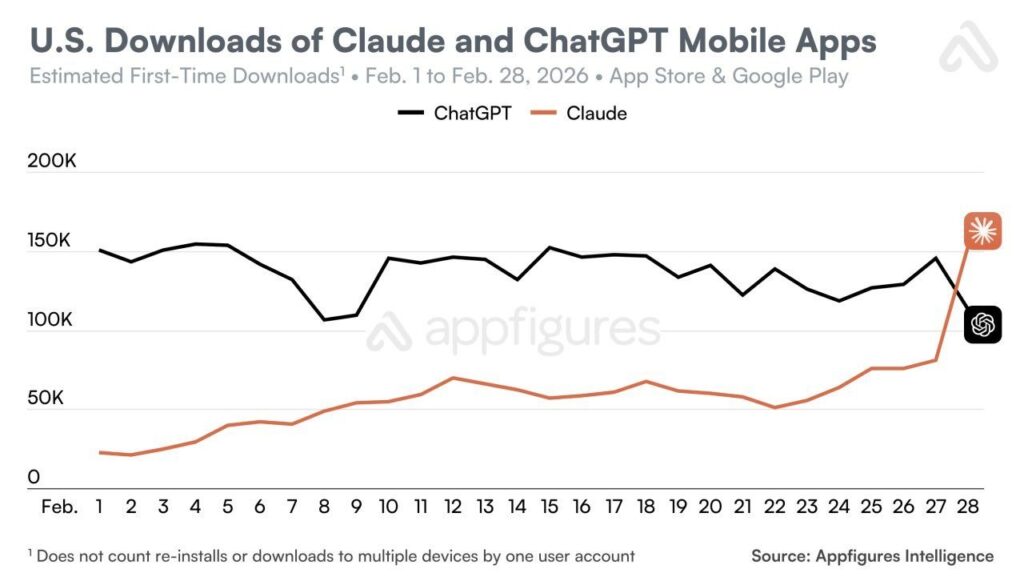
According to TechCrunch, Claude surged to the top of the free app rankings in the Apple US App Store, overtaking ChatGPT, after a series of events that drew sharp contrasts between the two companies. When the Department of Defense pressed Anthropic to loosen restrictions on how its AI could be used (including for autonomous weapons systems and mass domestic surveillance) Anthropic declined and held its policy limits in place. Hours later, OpenAI announced it had secured the same Pentagon contract under the terms Anthropic refused. The backlash was immediate – as reported by our local media source, Channel RVA. Daily signups to Claude hit record highs, free users jumped more than 60% since January, and paid subscribers have more than doubled in 2026.
This is so much more than a PR story. For AI SEO practitioners and the businesses that rely on them, the Claude shift is a meaningful signal about where the AI ecosystem is heading and what it means to optimize for it.
Contents
Why This Migration Matters for SEO
For a while, the dominant AI SEO conversation has been centered on ChatGPT and Google AI Overviews. Where does your brand show up when someone asks ChatGPT about your category? How are you performing in Google’s AI Overviews? What does Perplexity say about you?
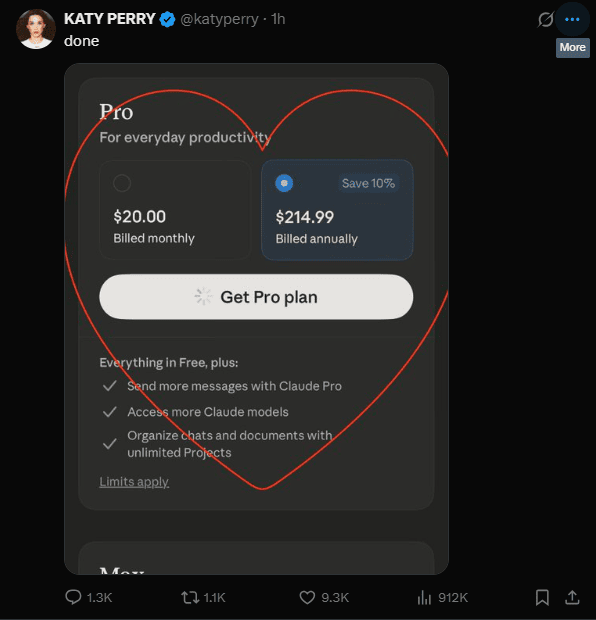
Claude has always been part of that conversation, but it’s becoming a much bigger part as we see every day professionals, major companies, and even celebrities coming out about which AI they prefer to use.
As of this week, Claude is the most-downloaded free AI app in the US App Store. Anthropic is actively courting migrations with a dedicated memory import tool that lets users transfer conversation history and preferences from ChatGPT, Google Gemini, and Microsoft Copilot directly into Claude. The feature is available across all Claude plans (Free, Pro, Max, Team, and Enterprise) and it’s designed to make switching as frictionless as possible. The message from Anthropic is clear: they’re ready to fill the gap that Open AI’s moral compass left open.
The implication for your brand’s AI discoverability strategy is equally clear: Claude’s search and retrieval behavior is no longer a secondary consideration. It’s primary.
How Claude Actually Uses Web Content (and How It Differs)
Here’s what most marketers don’t fully understand: Claude doesn’t crawl the web the way Google does.
According to research from Stridec, Claude relies on pre-trained datasets, licensed content sources, publicly available web content, and contextual synthesis. When connected to browsing tools or integrations, it interprets real-time web pages – but the core behavior is to extract meaning, not just keywords. It identifies entities, understands contextual relationships, interprets structured formatting, and synthesizes conceptual summaries.
What this means practically: ranking on Google is not the same as being referenced by Claude. They share authority signals, but Claude’s interpretation logic skews toward entity clarity, topical depth, and structural coherence over keyword density. A page that’s vague about what your brand actually does, or that buries its expertise in unstructured prose, is a page Claude will struggle to reference confidently.
The brands that get cited in Claude’s responses are the ones that have made it easy for a machine to understand: who they are, what they do, what expertise they hold, and how that expertise connects across a content ecosystem.
This is why your website’s authority as an origin signal isn’t just a Google play. It hasn’t been for a long time now. It’s the foundation for every AI platform’s understanding of your brand, Claude especially included.
What Claude Prioritizes When It Reads Your Site
Based on how Claude processes web content, a few patterns are consistent:
Entity clarity over vague positioning.
Claude evaluates entities: companies, services, frameworks, people, and industries. If your brand positioning is ambiguous, it can’t classify you confidently.
“We help businesses grow online” is invisible to Claude. “We build AI-first SEO systems that increase visibility in AI Overviews and conversational search” gives it something to work with.
Structure over storytelling.
Claude favors clear headings, direct definitions, bullet lists, logical segmentation, and FAQ formatting. Unstructured narrative reduces extractability.
This doesn’t mean your content can’t have voice and a particularly branded tone, it just means your structure has to make the expertise undeniable underneath the personality.
Topical ecosystems over isolated pages.
Claude evaluates authority indirectly through concept depth, internal consistency, thematic reinforcement, and relationship density.
A single outstanding blog post is less valuable than a cluster of interconnected, authoritative content that signals to Claude: this brand is the knowledge hub for this topic. This is exactly what the Good Farmer SEO method is built to produce – not one great crop, but an orchard worth the squeeze.
Technical accessibility.
Claude can’t extract from what it can’t access. Page stability, clean HTML rendering, structured data accuracy, and crawl accessibility all factor into whether Claude can reliably reference your content.
The fundamentals of technical SEO matter even more when the audience is broader and full of bots that will be translating your information to your end user.
The How-To: Optimizing for Claude in 2026
If you’re taking this seriously (and you should be), here’s how to approach it:
Step 1: Audit your entity positioning.
Go to your homepage, your About page, and your top 3 service pages. Ask yourself: if Claude read only these pages, could it write a one-sentence description of your brand that’s precise, credible, and categorically clear? If not, that’s your first fix. Define your brand with the clarity of a dictionary entry, not a tagline.
Step 2: Structure every piece of content for extraction.
Every article, every FAQ, every service page should be formatted so that a machine can pull a clean, self-contained answer from it.
Use descriptive H2s and H3s. Use FAQ sections. Use numbered steps for processes and make bullet points your content’s buddies. Use definitions for key terms. Think of each section as a potential standalone citation – because in Claude, or any AI for that matter, it might be.
Step 3: Build and reinforce content clusters.
Claude recognizes topical authority through pattern recognition across your site. The micro-strategies that make AI SEO actually work are almost entirely found in the cluster-level work: the specific, interconnected pieces that build the thematic depth Claude and all its LLM friends and foes reward. Map your Most Valuable Questions, build content around them, and link it all together with intentional internal architecture.
Step 4: Implement and validate your schema.
Schema markup is how you hand-deliver entity context to AI systems. Organization schema, Article schema, FAQ schema, HowTo schema aren’t optional extras for a fully LLM legible site. They’re how you tell Claude (and every other AI system) exactly what your content is and who it’s from. If your schema is missing or outdated, fix it before anything else.
Step 5: Monitor where you’re showing up — and where you’re not.
Ask Claude directly about your category. Ask it about your brand. Ask it the questions your customers are asking. Where does your brand appear in those responses? Where does a competitor appear instead? This is your competitive landscape in the Claude era, and it’s one most brands haven’t mapped yet. Earning AI referral traffic starts with knowing your current position in the conversation.
How to Actually Switch Your Team’s Workflow to Claude
If you’re also evaluating Claude as a working tool for your content and SEO team, not just as an audience to optimize for, the migration is pretty simple, but there are some gaps.
Anthropic has released a dedicated memory import feature that lets users transfer ChatGPT memory, custom instructions, and project context directly into Claude.
The process: copy Anthropic’s export prompt, paste it into ChatGPT to retrieve your stored preferences and context, then paste the output into Claude’s memory import settings. Your preferences, tone guidance, project history, and working style transfer without you having to rebuild from scratch.
I tried this myself – and the results are just okay. I’m going to have to get granular with my projects and details of each chat, not just settle for this top-level knowledge. I’ve been with Xponent21 for a year now and have plenty of memory over in Chatty G, so it will take some dedicated time to make a new AI workflow worth it for me. But, I am confident that it will be worth it, judging from my rudimentary work in Claude thus far. The syntax, rationale, and UX is all so much better – and so are the guiding principles of this company.
For teams that have invested in ChatGPT custom GPTs or project-specific instructions, it’s true that those can be manually reconstructed in Claude’s Projects feature – which functions similarly and in many cases offers more contextual consistency across long conversations.
My honest take as a pro making the switch: Claude tends to follow complex instructions more reliably, produces longer-form outputs with better structural coherence, and handles nuanced editorial and strategic tasks with less drift. For SEO content work specifically – drafting, cluster planning, FAQ generation, schema writing, competitive analysis – Claude’s handling of extended context is a genuine advantage.
Our Take: This Is What “Staying Current” Actually Looks Like
At Xponent21, we’ve said it before and we’ll keep saying it: the AI landscape changes faster than any single strategy can accommodate. The brands that win in AI SEO aren’t the ones with the perfect playbook, they’re the ones with the fastest feedback loops. They plant, they tend, they watch what grows, and they adapt.
The Claude migration is one of those moments that rewards the brands already doing the foundational work. If your content is structured, your entities are clear, your topical authority is deep, and your technical foundation is solid, you’re already positioned for Claude visibility. The migration doesn’t require you to start over. It requires you to stay consistent and recognize that the audience reading your content now includes one more highly influential AI.
If you haven’t started that foundational work yet, this is a good time to begin. The window where you can build authority before your competitors figure it out is always shorter than it looks.
Curious where your brand stands in Claude’s responses right now? Reach out through our contact form — we audit AI visibility as part of our broader SEO strategy work. And follow us on LinkedIn to stay current as this keeps evolving.

Kayleigh Crandell
Kayleigh Crandell is a dynamic marketing professional with a passion for project coordination, creative storytelling, and community engagement. As Marketing Projects Coordinator at Xponent21, she leads initiatives across content, SEO, social media, and creative campaigns, collaborating closely with clients and internal teams to deliver outstanding results.
Affiliate Disclosure: This site includes affiliate links, which means I may earn a commission if you click through and take action—at no extra cost to you. I only promote tools and services I trust and use myself.
Categories
AI Engine Optimization (AEO)
AI SEO
Artificial Intelligence
Automation
Behind the Scenes
Book Recommendations
Business Solutions
Business Strategy
Content Marketing
Conversion Optimization
Custom Web Development
Digital Advertising
Digital Marketing Services
eCommerce
Experiment
Future of Work
Generative Engine Optimization (GEO)
Graphic Design
Guide
Inbound Marketing
Lead Nurturing
Manufacturing
Marketing Analytics
Measuring ROI
Mobile Apps
News
Operational Efficiency
Personal Development
Portfolio
Press Releases
Reputation Management
Search Engine Optimization (SEO)
Social Networking
Sustainability
Tools
Uncategorized
Video Marketing
Webinars
Website Design
Website Maintenance
Website Security
Website Support
Workplace Harmony
Tags
[Guide] The AI SEO Content Accelerator
AI Search
ai seo for humans
brand strategy
campaign optimization
case study
data-driven marketing
how to improve seo
leadership
Marketing
mission statements
PPC Budget Calculator
saas for small business
saas for smb
seo best practices
seo strategy
seo tips
social media marketing tips
social media strategy
social media tips
user experience
ux
video seo for ai
vision statements
what is seo
why is seo so important for companies