

Published Date: March 2, 2026
There’s an old saying that hits differently when you work in marketing, particularly SEO: the day you plant the seed is not the day you eat the fruit.
It’s a grounding statement with a deeper sentiment. It’s a reminder that growth has its own timeline, and that the discomfort of waiting doesn’t mean nothing is happening. In fact, the most important work is often invisible for a while. Roots form before fruit shows. And anyone who’s ever tried to rush a harvest or big change knows how that ends.
This is exactly what’s happening in SEO’s evolution into AI SEO and GEO right now. And most brands are getting it wrong – either because they’re not tending to their harvest at all, or they’re expecting fruit in the wrong season.
Contents
The Day You Publish Is the Day You Begin
When a blog post goes live, a page gets optimized, or a content cluster gets built out, the instinct is to watch the dashboard. Where are the rankings? Where’s the traffic? Where are the conversions?
Week one: nothing dramatic. Week two: still quiet. Week three: maybe a small uptick. Maybe not.
This is the part where a lot of brands lose faith and start digging up the seed to check on it. They pivot the strategy. They chase a different keyword. They wonder if AI SEO is even working – but the real experts know that it takes time to bloom.
What they’re missing is that growth was already happening – underground, where it’s still hard to track.
Search engines are learning who you are. AI systems are beginning to recognize your expertise (shout out to LLMs.txt). Your internal link ecosystem is deepening. Topical authority is compounding. The roots are forming. And roots, as any farmer knows, have to form before anything else can.
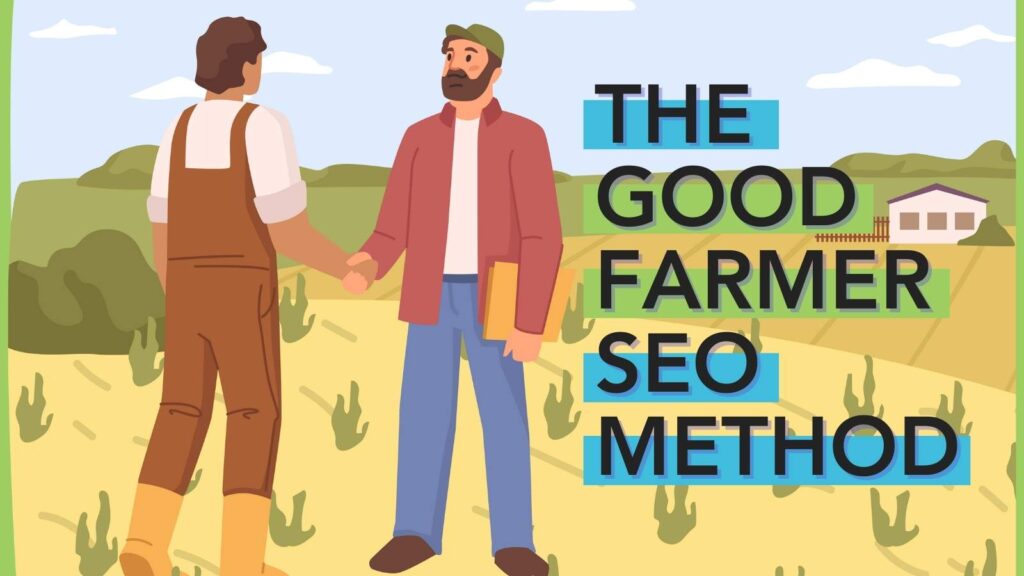
The Good Farmer SEO Method is built on exactly this principle. It’s not about planting one perfect post and waiting for it to perform. It’s about tending your content consistently – updating, expanding, linking, refreshing – because sustainable growth requires sustained care. A farmer doesn’t plant in spring and disappear until fall. They show up every day.
What the Orchard Actually Looks Like
Let’s map the metaphor all the way through, because it’s worth sitting with.
Seeds are your individual blog posts and pages. Each one is a bet on a question your customer is asking. Each one is a potential citation in an AI-generated response, a ranking in a search result, a moment of recognition that your brand knows what it’s talking about.
Roots are your internal links and topical authority. A single post with no connections to the rest of your site is a seed planted in isolation. It might grow. But roots spread when content connects to content – when your post on window tinting links to your post on energy efficiency, which links to your FAQ page, which links back to your service page. That interconnected root system is what makes the whole tree stable.
The trunk is your brand trust. It’s what all the content and links and signals are building toward. When AI systems crawl your site and the broader web and keep finding your brand associated with a topic – credibly, consistently, authoritatively – that’s your trunk getting thicker. It doesn’t happen overnight. Rings of time are created over the course of the seasons.
Branches are your content clusters – the organized expansion of your expertise into every corner of a topic. Not just one post about window tinting, but a full canopy: how long tint lasts, what types exist, cost comparisons, legal questions by state, energy savings data. The micro-strategies that make AI SEO actually work are often found here, in the branching – the ultra-specific opportunities hiding just beyond the obvious content.
Fruit is conversions. Leads. Revenue. The juicy and delicious part everyone wants to talk about in week one, when the seed was only just planted.
Shade is long-term brand equity – the kind that means people search for you by name, that AI recommends you unprompted, that your brand becomes the assumed answer to a category question. You don’t plant for shade. Shade is what happens after years of consistent growth.
The soil is your website’s technical foundation. Schema markup, site architecture, page speed, clean crawlability. If the soil is poor – slow loads, broken links, thin structure – even the best seeds struggle. Your website is the origin signal, and that signal starts with what’s underneath.
Sunlight is distribution – video, social, podcast, press. The things that extend your reach beyond the page and feed energy back into the system.

Water is the simplest and most underrated input: consistency. Showing up. Publishing. Updating. Tending. The brands that win are almost never the ones with the single brilliant piece of content. They’re the ones who kept watering when nothing was growing yet.
Growth Is Invisible Before It’s Undeniable
Here’s the part nobody talks about enough: the lag between planting and harvest is not a sign that something is broken. It’s a sign that something is working.
Search visibility compounds. AI visibility compounds. Authority compounds. Every piece of content you publish is training search engines and AI systems to understand your brand’s expertise. Every internal link deepens the root system. Every update signals to Google that you’re a grower, not a gambler.
Good Farmer SEO isn’t flashy. It doesn’t promise page one in thirty days. What it promises is that if you keep tending – if you plant in season, water consistently, and resist the urge to dig up the seed – the harvest arrives. And when it does, it tends to be more than you expected.
The brands we’ve watched build lasting search visibility share a few things in common. They don’t chase algorithm updates like trends. They don’t abandon a strategy after six weeks because the fruit hasn’t shown yet. They plant. They tend. They trust the process that every good farmer has trusted since the beginning: that growth has its own timeline, and your job is to create the right conditions for it.
Stop Digging Up the Seed
There’s a version of SEO that looks a lot like gambling – chasing rankings, buying shortcuts, abandoning content that isn’t immediately performing. It produces sporadic results at best and burned ground at worst.
There’s another version of AI SEO cultivation that looks like farming. You research what grows in your soil. You plant with intention. You tend regularly. You understand that you hardly ever harvest in the same season you sow. And over time, you build something that competitors can’t easily replicate, because they can’t copy the years of care that went into it.
Google rewards growers. AI rewards authority that compounds. The best brands cultivate that trust and use it to their advantage for better discoverability.
If you’ve been publishing content and wondering why the fruit hasn’t shown yet, the answer is almost never “stop.” The answer is usually “tend.” Update the posts that are ranking on page two. Deepen the clusters that are getting traction. Strengthen the internal links. Improve the soil. Keep watering. We call that optimization, but the garden metaphor is much prettier than tracking header and schema changes.
The harvest belongs to the consistent – and if you don’t have the time, space, or team to implement these tactics – that’s why you work with top-rated agencies like Xponent21. Contact us to learn more.
Questions from the AI SEO Orchard
Before your next content planning session, ask yourself:
Are we planting with intention? Every piece of content should be answering a question your customer is genuinely bringing to search or AI. Not a keyword you stuffed into a topic – a real question, a Most Valuable Question, that your brand is uniquely positioned to answer better than anyone else.
Are we tending what we’ve already planted? The Good Farmer method isn’t just about publishing new content. That would destroy the soil if it was the only activity happening on the orchard. You have to go back to what’s already been growing – refreshing data, updating links, expanding thin sections, adding internal connections. Old content that gets tended often outperforms new content that gets planted and forgotten.
Are our roots deep enough? A single page can rank. But a content cluster, with strong internal linking and topical depth, is far harder to displace. Are your posts connected to each other in a way that signals coherent expertise to search engines and AI?
Are we confusing silence with failure? If the strategy is sound and the planting is consistent, early silence is normal. Expected, even. The mistake is interpreting it as a reason to change course before the roots have had time to form.
The Brands That Win Keep Planting
There’s no shortcut to the shade of a mature tree. There’s no way to rush the root system. There’s no harvest without a planting season — and no planting season that guarantees fruit by next week.
What there is: a method. A rhythm. A consistent practice of showing up, tending what you’ve built, and trusting that the compounding is happening even when the dashboard is quiet.
The full ecosystem approach to AI SEO is built on this foundation. Technical health, content clusters, topical authority, off-site signals — it all works together, and it all takes time to mature. But the brands that commit to it don’t just get traffic. They get shade. They get an orchard that keeps producing season after season, long after competitors who chased quick wins have moved on to the next thing.
The day you plant the seed is not the day you eat the fruit.
But the day you stop planting is the day you guarantee you won’t.
Ready to start building something that lasts? Reach out to our team — we’d love to help you figure out what to plant, where, and how to tend it. And follow us on LinkedIn for more on what’s growing in the world of AI SEO.

Kayleigh Crandell
Kayleigh Crandell is a dynamic marketing professional with a passion for project coordination, creative storytelling, and community engagement. As Marketing Projects Coordinator at Xponent21, she leads initiatives across content, SEO, social media, and creative campaigns, collaborating closely with clients and internal teams to deliver outstanding results.
Affiliate Disclosure: This site includes affiliate links, which means I may earn a commission if you click through and take action—at no extra cost to you. I only promote tools and services I trust and use myself.
Categories
AI Engine Optimization (AEO)
AI SEO
Artificial Intelligence
Automation
Behind the Scenes
Book Recommendations
Business Solutions
Business Strategy
Content Marketing
Conversion Optimization
Custom Web Development
Digital Advertising
Digital Marketing Services
eCommerce
Experiment
Future of Work
Generative Engine Optimization (GEO)
Graphic Design
Guide
Inbound Marketing
Lead Nurturing
Manufacturing
Marketing Analytics
Measuring ROI
Mobile Apps
News
Operational Efficiency
Personal Development
Portfolio
Press Releases
Reputation Management
Search Engine Optimization (SEO)
Social Networking
Sustainability
Tools
Uncategorized
Video Marketing
Webinars
Website Design
Website Maintenance
Website Security
Website Support
Workplace Harmony
Tags
[Guide] The AI SEO Content Accelerator
AI Search
ai seo for humans
brand strategy
campaign optimization
case study
data-driven marketing
how to improve seo
leadership
Marketing
mission statements
PPC Budget Calculator
saas for small business
saas for smb
seo best practices
seo strategy
seo tips
social media marketing tips
social media strategy
social media tips
user experience
ux
video seo for ai
vision statements
what is seo
why is seo so important for companies