
By: Courtney Turrin
Published Date: December 31, 2025
Modified Date: January 30, 2026
A cross-industry snapshot of real AI Overview and LLM citations — and what early signals reveal about trust, authority, and the future of search.
Since Google began rolling out AI Overviews, most commentary about “AI SEO” has been speculative. Marketers want to know:
- What do AI Overviews actually cite?
- Does domain authority still matter?
- Can smaller brands realistically compete?
- Are AI Overviews stable enough to invest in?
Few agencies can answer these questions meaningfully because few have enough cross-industry activity to observe real patterns.
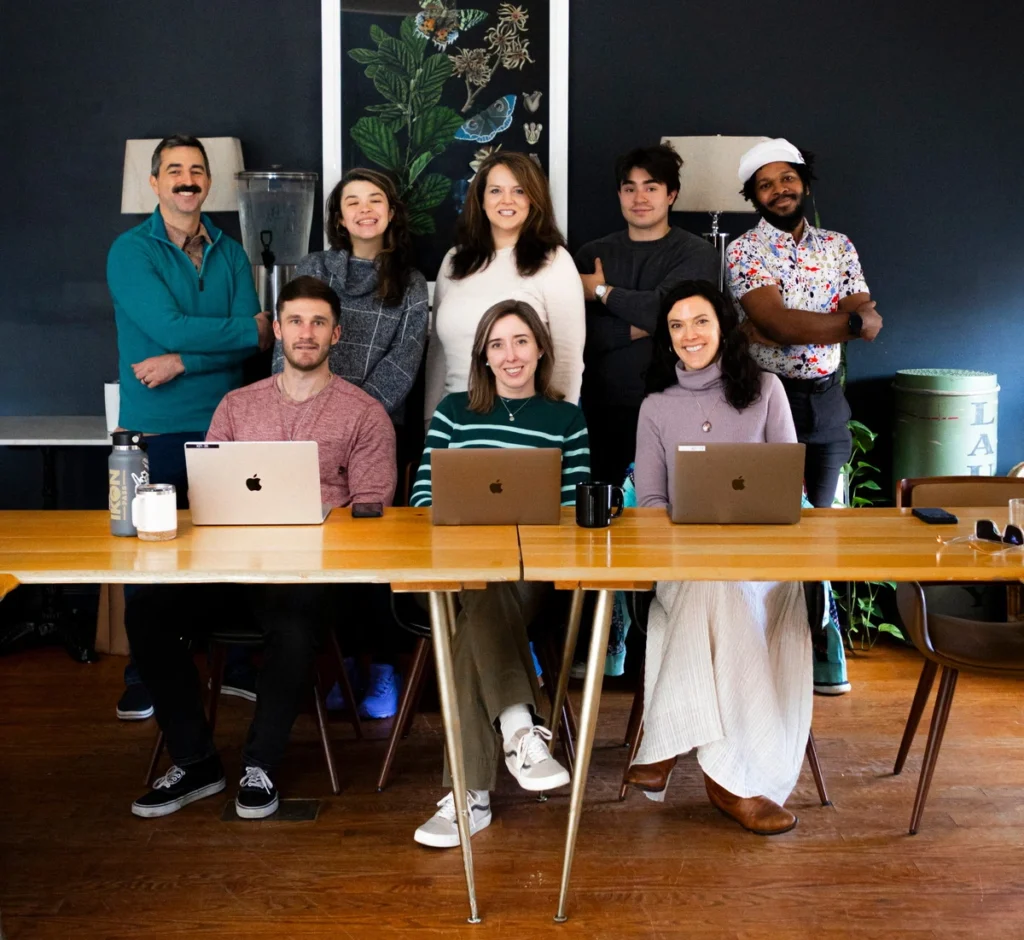
But at Xponent21, we’ve had an unusually clear vantage point. Since July, we’ve worked with about twenty AI SEO clients across industries including home services, medical and wellness, fitness, B2B professional services, manufacturing, automotive, and national consumer brands. These clients are in various stages of our AI SEO workflow — from foundational SEO hardening to advanced content engineering and optimization — and we systematically track visibility across SE Ranking, Google Search Console, Cognizo, Peec.ai, and our internal AI Overview Evidence Log.
Our AI Overview Evidence Log is a continuously updated dataset of citation screenshots, query themes, and performance observations across our AI SEO client base.
Across this dataset, one conclusion is unmistakable:
AI SEO is already working across industries, driving visibility in AI Overviews, fueling citations in major LLMs, and producing measurable business outcomes far earlier than expected.
Below is a snapshot of what we’re seeing — patterns, examples, and implications for leaders navigating the early stages of AI-driven search.

Contents
- What We Mean by AI SEO
- Why Our Vantage Point Is Unique
- The Early Business Impact: What These Citations Mean in Practice
- What We’ve Learned From 100+ Citations: The Patterns Behind the Wins
- Why These Results Are Happening: A Systems Perspective
- How AI Overviews Differ From Traditional Organic Search
- Where AI Overviews Are Headed
- What Marketing & SEO Leaders Should Do Now
- Continuing the Work: A Global AI SEO Community
What We Mean by AI SEO
AI SEO is the practice of structuring a brand’s information ecosystem — content, architecture, semantic clusters, and workflow-level expertise — so generative AI systems like Google’s AI Overviews and LLMs such as ChatGPT, Perplexity, and Gemini can accurately retrieve, interpret, and cite it. AI SEO blends:- semantic modeling
- cognitive fluency principles
- structured explanation
- expertise informed by subject matter experts (SME)
- workflow-based content production
It is not about keyword hacks — it is the discipline of building information ecosystems that AI systems trust.
Why Our Vantage Point Is Unique
We’re still early in the adoption curve — not because demand is slow, but because the category of AI SEO is nascent. Brands waiting for “best practices to settle” risk losing early authority signals that will compound over time.
We’ve written previously about this early-mover advantage, as well as our own internal AI SEO experiment launched in Summer 2024 — a project that produced outsized results (>4,000% visibility growth!) and ultimately shaped our current methodology.

With nearly twenty clients already in the program, we’re observing early patterns across a breadth of industries that most agencies haven’t yet accumulated.
Across industries, query types, and stages of the buyer journey, we’re seeing AI Overviews surface brands that demonstrate clarity, depth, and consistency — often faster than traditional SEO alone would suggest. The real question is not what is being cited, but what impact that visibility is having.
The Early Business Impact: What These Citations Mean in Practice
Visibility is important, but business results matter more. And the early performance signals are compelling:
Medical & Wellness Provider
Just three months into our AI SEO program, this client reported that “Everything has been great. Performance is up across the board.” Their Practice Manager shared that the practice experienced a record number of new patients last month, rivaling their strongest historical growth cycles.
These business outcomes are reflected clearly in the search visibility data. We published the first batch of AI-optimized content between September 25 and November 5. Within three months of publication, this content drove rapid, exponential growth in search visibility, indicating strong early traction.
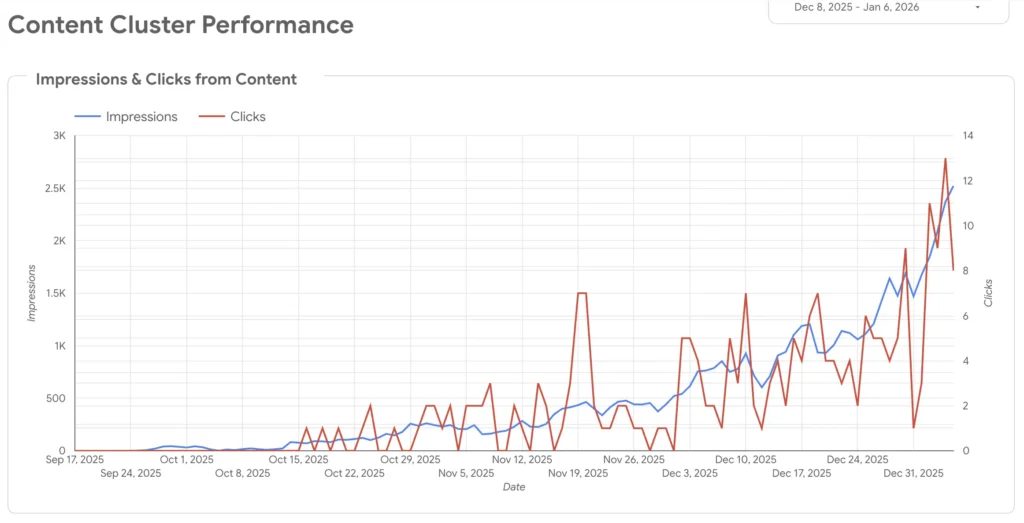
This pattern — sharp early visibility gains following cluster publication — mirrors what we’ve observed across other AI SEO engagements.
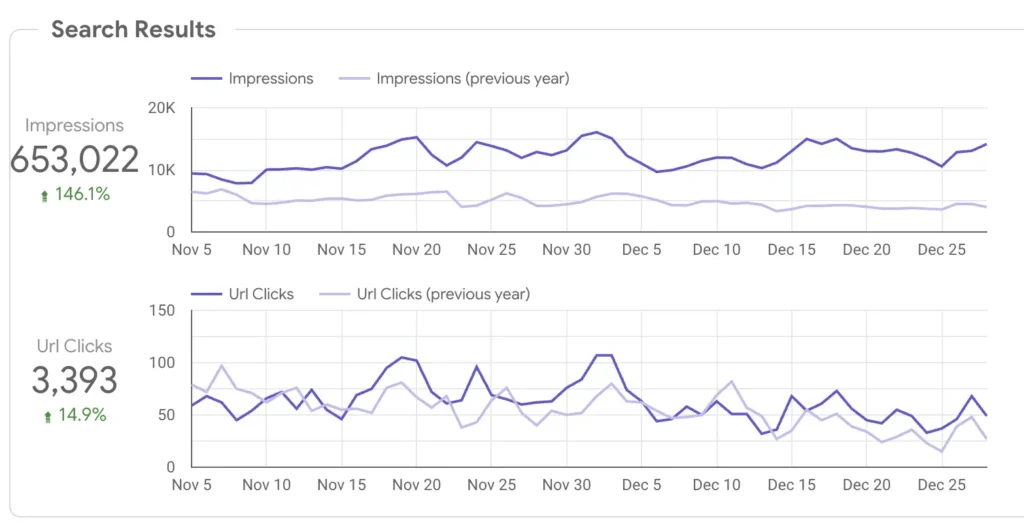
When viewed alongside overall site performance, we see corresponding increases in impressions and clicks immediately following publication — suggesting that improved visibility likely contributed to the observed business growth.
National Pool Installation Company
Four months after publishing their newest content cluster, this client saw a 54% increase in web leads year-over-year. They also began earning AI Overview citations for competitive regulatory queries, often out-ranking state agencies and legal institutions.
Notably, these gains occurred during what is typically a seasonal slowdown for the business. Instead of the usual winter dip, the team reported sustained demand and an unusually full pipeline — a meaningful departure from historical patterns.

The content underpinning these results continues to attract qualified traffic and has become some of the highest-performing material on the site, reinforcing its role as a durable source of visibility and demand.
Automotive Retailer
After an SEO-first website rebuild engineered for AI comprehension — including HTML structuring, schema, semantic architecture, and supporting content — this client had their “best sales month of the year” within 30 days.
In the 6 months since launching their new site, publishing new AI SEO content, and continuously applying optimizations to maintain and improve visibility, we’ve measured consistent growth in organic impressions.

While AI Overview visibility correlates with these real business gains, we interpret citation behavior as part of a broader shift in brand authority — not a standalone cause — and a sign of where search is headed.
What We’ve Learned From 100+ Citations: The Patterns Behind the Wins
AI systems don’t have brand loyalty. They have clarity loyalty.
1. AI Overviews Reward Clarity Over Brand Size
Unlike traditional SEO — where domain authority and backlinks often dominate — AI systems elevate content that is:
- conceptually clear
- semantically complete
- structured predictably
- consistent across pages
This is why mid-market brands often appear above:
- state agencies
- medical institutions
- national corporations
- high-authority publishers
Clarity consistently beats reputation.
2. AI Systems Cite Content That Reduces Cognitive Load
Cited pages repeatedly exhibit psychological trust signals:
- well-organized definitions
- linear, stepwise explanations
- non-salesy tone
- authoritative but accessible language
- predictable formatting patterns
AI Overviews and LLMs cite the content that is easiest to understand and hardest to misinterpret.
3. Topical Depth Outperforms One-Off Pages
Brands with the strongest citation traction display:
- deeply interlinked content clusters
- semantic reinforcement across multiple assets
- clear conceptual hierarchy
- consistent narrative structure
- unified topical ownership
Citation patterns mirror the buyer journey:
Awareness:
“What is X?” → definitions
Consideration:
“X vs. Y” → comparisons
Decision:
“requirements for…” → specifics
Loyalty:
“how to maintain…” → expertise
This echoes what we found in our own 2024 AI SEO experiment — clarity and depth compound.
4. Problem–Solution Framing Performs Exceptionally Well
AI Overviews favor content that supports reasoning:
- troubleshooting guides
- regulatory explanations
- risk analysis
- “how to choose” frameworks
- complex trade-off explanations
These pages help the user think — and help AI systems verify intent.
5. Consistency, Recency & Publishing Cadence Influence Visibility
One of the strongest patterns in our Evidence Log is that production volume and cadence matter.
When we publish an entire content cluster, we consistently observe:
- visibility spikes in Search Console
- increased crawl activity
- new AI Overview citations shortly after publishing
- higher likelihood of retrieval in ChatGPT, Perplexity, and Gemini
- broader topical coverage across related queries
These effects stem from:
- Recency signals – Fresh content gets pulled into retrieval models sooner.
- Momentum effects – Consistent publishing strengthens authority.
- Cluster lift – Multiple related pages build contextual scaffolding AI systems rely on.
Consistent publishing compounds.
Sporadic publishing produces sporadic visibility.
Why These Results Are Happening: A Systems Perspective
As Chief Work Officer, my role is to design the systems that make AI SEO repeatable, measurable, and adaptable across teams and industries.
Our early traction is not a coincidence — it’s the output of systems designed for AI comprehension.

We architect content ecosystems.
Clusters, semantic structures, and conceptual clarity create reliable context for AI systems.
We optimize for every stage of the buyer journey.
This drives citations in awareness, consideration, decision, and loyalty.
We use SMEs strategically.
Human expertise elevates content quality beyond what AI can generate.
We engineer HTML and schema for precision.
AI systems rely on structural signals to interpret meaning and hierarchy.
We produce with consistency and nuance.
Our workflow ensures that everything ladders into strategy — nothing is random. Even our social media content is integrated with the overall strategy.
We measure continuously.
SE Ranking, GSC, Cognizo, Peec.ai, and our internal log allow us to track patterns with rigor.
These systems create a foundation of trust — which is exactly what AI systems reward.
How AI Overviews Differ From Traditional Organic Search
| Traditional SEO Rewards… | AI Overviews Reward… |
| Backlinks | Conceptual clarity |
| Domain authority | Semantic completeness |
| Keyword density | Explanatory coherence |
| Brand size | Cognitive fluency |
| Individual pages | Ecosystem consistency |
AI Overviews change the center of gravity in search:
Smaller, clearer brands can outperform larger, more established ones if their information is easier for AI to understand and validate.
This is the most significant reshaping of digital authority in two decades.
Where AI Overviews Are Headed
Citations are still evolving — and fluctuations are expected. But three trends are becoming clear:
1. Higher Quality Thresholds
Google is refining safeguards to reduce low-quality and contextually mismatched citations.
2. Greater Emphasis on Signal Alignment
Expect rising importance of alignment between:
- on-page clarity
- schema
- topical depth
- internal linking
- entity coherence
- crawl frequency
- user engagement
Better signal alignment will lead to more stable citations over time.
3. Early Authority May Become a Durable Baseline
Brands demonstrating expertise early appear repeatedly across related queries:
The brands establishing topical authority now may define their categories in generative search for years to come.

What Marketing & SEO Leaders Should Do Now
Waiting may mean falling years behind.
2. Build content ecosystems, not one-off pages.
Clusters win.
3. Design for AI comprehension.
Clarity → trust → citation.
4. Maintain publishing cadence.
Momentum matters.
5. Treat AI Overviews as both visibility and credibility.
If AI cites you, users trust you.
AI SEO is still early. The systems behind AI Overview and LLM citations are evolving, and no model is perfect. But the patterns emerging now are consistent enough to offer real direction for leaders who can’t afford to wait for complete stability.What we’re seeing with generative search is a shift toward information ecosystems that reward clarity, consistency, and human-centered design. Brands that invest in these foundations early are gaining visibility — and they’re shaping how AI systems understand their category.

Continuing the Work: A Global AI SEO Community
As AI-driven search continues to evolve, one thing is clear: no single company, agency, or tool has all the answers. Progress in this space depends on shared observation, experimentation, and collaboration across disciplines.
Stay ahead of the shifts shaping AI optimization at DiscoverAIO.com.
Join industry leaders shaping the future of AI optimization. Connect with 2,500+ professionals worldwide on DiscoverAIO to collaborate, share research, and define best-in-class AIO.

Courtney Turrin
As the company’s number two employee, Courtney has helped guide the direction of our business, build a powerhouse team, and implement technology and workflows to improve service delivery and produce outsized results for our clients. Her current role sits at the intersection of analytics, work management, and operations. Drawing on her background in scientific research, Courtney designs efficient processes and supports our teams so they can better serve our clients. She holds masters degrees in Biology and Psychology/Neuroscience from the College of William and Mary and Yale University, respectively. Offline, Courtney is a plant whisperer, Peloton enthusiast, and proud pet mom.
Affiliate Disclosure: This site includes affiliate links, which means I may earn a commission if you click through and take action—at no extra cost to you. I only promote tools and services I trust and use myself.