
By: Courtney Turrin
Published Date: May 1, 2026
Modified Date: July 29, 2026
We have more ways to reach each other than at any point in human history. We are still genuinely bad at communicating.
Not bad at talking — we talk constantly. The failure isn’t in volume or velocity. It’s in understanding: whether the person on the other end of your message actually has what they need to receive it the way you intended.
Theory of Mind, and Why It’s Harder Than It Sounds
During my graduate studies at Yale, I had the opportunity to collaborate on research with Dr. Laurie Santos, a comparative psychologist whose work focuses on animal cognition and the origins of human behavior. Our research took us to Australia to study dingoes — specifically how they use eye contact and social cues compared to domestic dogs — and I also spent time studying social behavior in monkeys. The unifying thread: how do social animals understand and respond to the mental states of others?

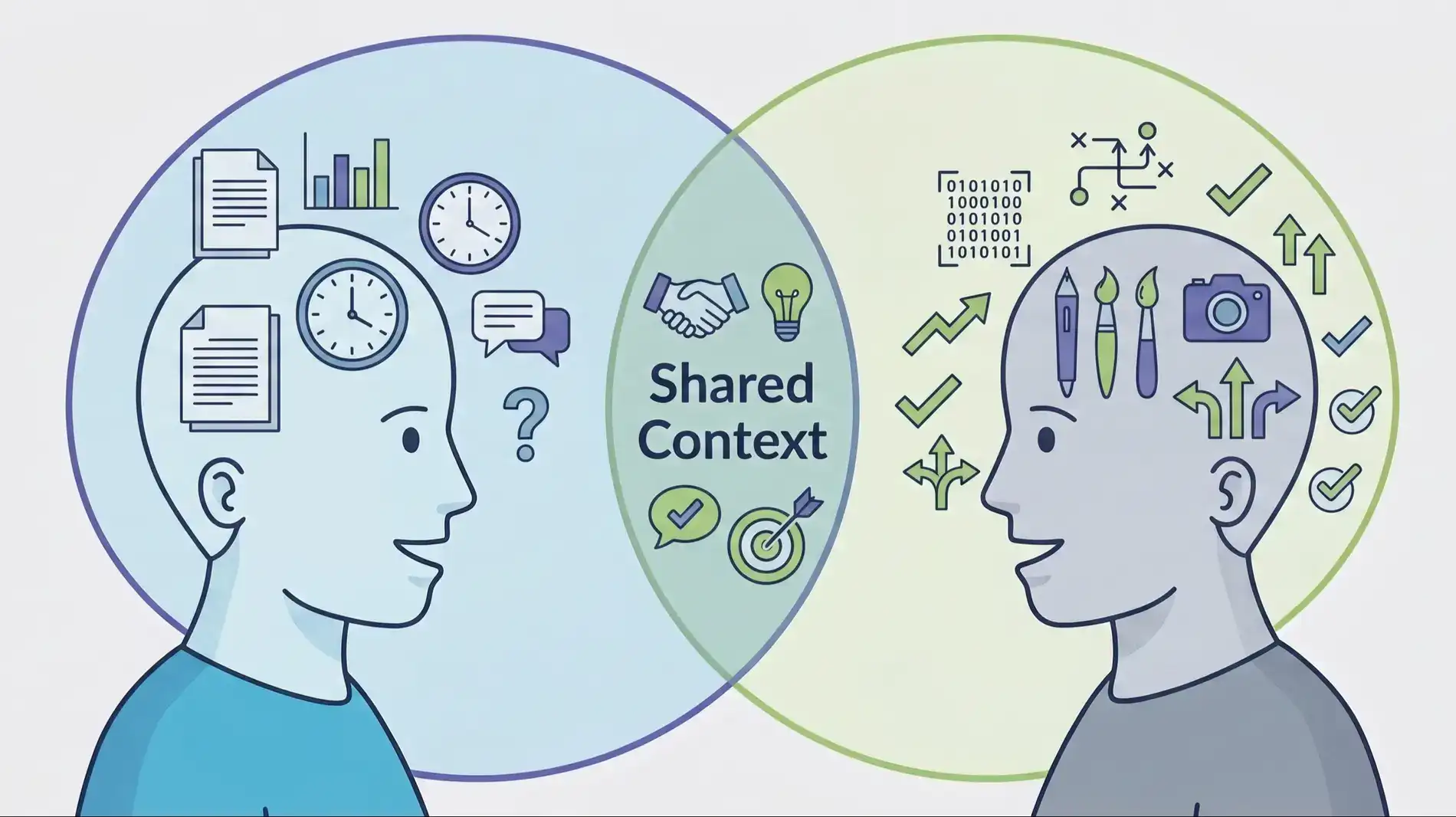
This capacity is called theory of mind — the ability to recognize that other individuals have their own knowledge, beliefs, intentions, and perspectives that may differ from your own. It’s a cognitively demanding task. You have to mentally simulate someone else’s state of knowledge: what they know, what they don’t, what they’ve experienced, what they’re likely to assume. In the animal kingdom, this higher-order ability is rare. Humans have it. Great apes show evidence of it. Dogs demonstrate elements of it in ways that are genuinely fascinating, particularly in reading human social cues. The list doesn’t go much further.
But having the capacity for something and consistently deploying it are two very different things.
Research suggests we routinely fail to apply our theory of mind in everyday communication. We fall into what psychologists call the “curse of knowledge” — once we know something, we have real difficulty imagining what it’s like not to know it. We share our conclusions without the reasoning behind them. We omit context we’ve internalized so thoroughly we no longer recognize it as context. We don’t account for the life experiences, professional backgrounds, or prior conversations that might cause someone to interpret our words very differently than we intended.
This isn’t carelessness. The simulation is computationally expensive. Running a full model of another person’s state of knowledge, in real time, on top of everything else our brains are processing, is hard. So we skip it, or run an abbreviated version, and fill in the gaps with our own perspective.
Interestingly, this is a failure mode AI shares. Push a lower-tier model or overload a context window and the outputs start cutting corners in similar ways — plausible-sounding conclusions without the reasoning behind them, missed nuance, pattern-matching where actual engagement is needed. Investing in a more capable model often means the difference between output you can shape into something useful and a conversation that devolves into increasingly colorful feedback directed at your screen. The resource constraint is different, but the behavior rhymes:
When the system is under-resourced, perspective-taking is the first thing to go.
For both humans and machines, the gap between what’s being communicated and what’s actually understood often comes down to how much is being held internally versus made explicit.
The Gap in My Own Head
I’m an introvert, and one thing I’ve had to consciously correct for is that I do a significant amount of processing entirely inside my own head. I’ll think through an entire situation, arrive at a decision, work through the implications — and feel like I’ve communicated when I haven’t said a word out loud. I’ve done this with colleagues. I’ve done this with my spouse, who knows me better than anyone and still sometimes learns about something I’ve apparently been sitting with for weeks.
The thoughts felt shared because they were vivid. They just only existed in one place.
That’s an extreme version of something most people do in some form. We communicate our conclusions and leave the interior work invisible. We assume shared context that isn’t there. We don’t realize we’re doing it.
In Person, the Gaps Are Harder to Hide
For several years, Xponent21 operated as a fully remote agency. We were productive by most measures — we built good workflows, leaned into async collaboration, and were thoughtful about how we designed the work environment to support it. But something was consistently harder than it should have been: creative collaboration. Without real-time, in-person exchange, a lot of the connective tissue was missing — the half-formed idea thrown out mid-conversation, the expression that tells you someone isn’t actually aligned, the side conversation that becomes the real conversation.
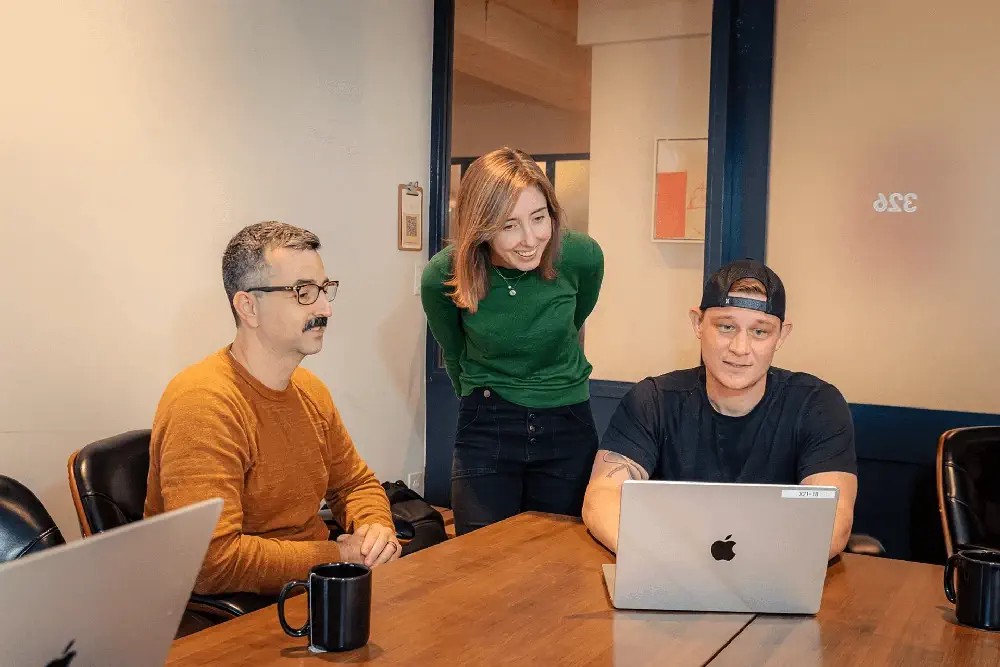
When we opened our Richmond office in 2025 and shifted to a hybrid model, we felt the difference immediately. Creativity went up in ways that are hard to quantify but easy to see — including projects we never would have attempted remotely, like our ongoing parody series The Agency, a take on The Office set inside a digital marketing agency. That kind of creative energy requires trust, timing, and physical presence. You can’t Slack your way to it.
Episode three, our most-watched to date, follows our CEO Will Melton as he builds an AI version of himself — and what his colleagues do when they realize they can over-prompt Will 2.0 to get around the real Will.
What Prompting Taught Me About People
Here’s something I didn’t expect: working with large language models has made me a better communicator with humans.
Using an LLM well requires you to make your context explicit. The model doesn’t know what industry you’re in, what your goals are, what you’ve already tried, or what “good” looks like to you. If you want useful output, you have to provide that context upfront — every time. At first, it feels like friction. You’re writing more before you even get to the actual ask, or voice-to-text dumping context out loud and letting the model sort through it before you frame the request.
But something shifts over time. You start doing the work of making your thinking legible before you share it. You start asking: what does this person actually need to know to understand what I’m asking? What context am I holding that they don’t have? What assumption am I making that I haven’t stated?
That is, almost word for word, what theory of mind asks of us.
The discipline of good prompting is the discipline of perspective-taking applied to communication. And once that muscle gets exercised regularly, it carries over. I notice it in how I brief my team now, in how I structure client communications, in how I try to have harder conversations: more context upfront, fewer assumptions about what the other person already understands, more explicit about what I need and why.
Communication Is the Job
Every marketing campaign, every piece of content, every ad is an exercise in applied theory of mind. We’re asking: who is this person, what do they already know and believe, what do they care about, what will get them to stop scrolling and actually pay attention? Brand standards exist precisely because consistent communication signals trustworthiness — they’re guidelines for how a brand presents itself across every touchpoint so that audiences always know who they’re dealing with.
The same rigor we apply to audience communication is worth applying internally. This showed up in a small but telling way for us recently. Two members of our communications team — both strong thinkers, both with real opinions about how to do the work well — scheduled an in-person sync at a coffee shop to talk through how to collaborate with each other more effectively. They could have done it over Slack. They chose not to. The conversation they had in person would have taken three times as long and produced half the clarity over a message thread.
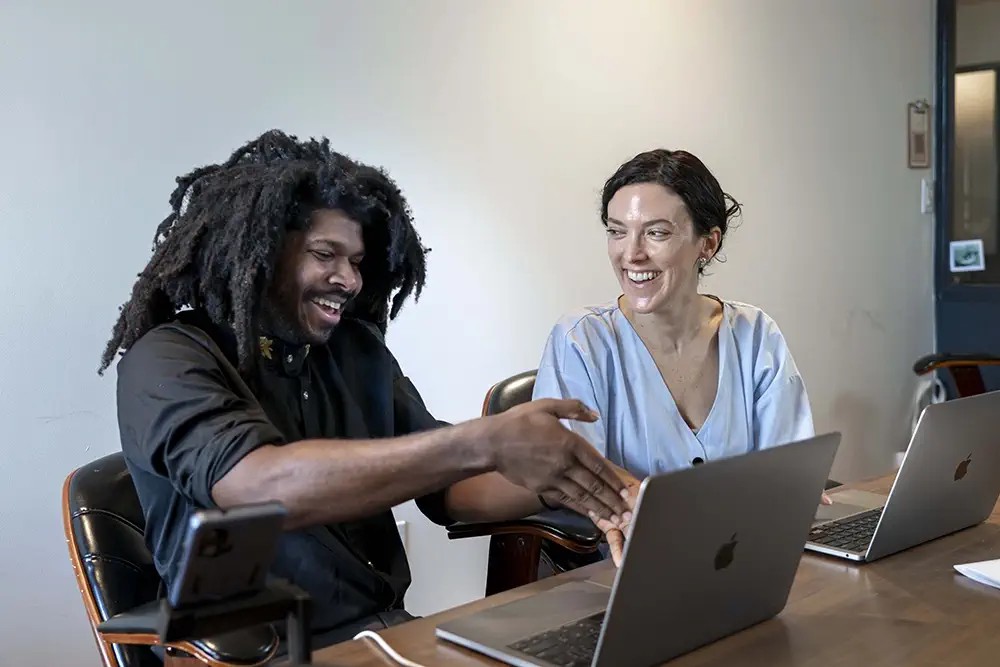
The human choice to show up personally — to pick up the phone, to be in the room, to actually think about who’s on the other end of your message and what they need to receive it — is no longer just good practice. Presence is differentiation.
The Last Differentiator
As human and AI collaboration becomes standard, communication matters more, not less. The tasks we keep for human collaboration — strategy, creativity, judgment, relationship-building — are precisely the ones where alignment is hardest to achieve and most expensive to get wrong. These aren’t tasks you can afford to do with ambiguous briefs and unstated assumptions.
If two teams have access to the same tools, the same models, the same data — which one wins? The one where people actually understand each other’s goals, constraints, and reasoning. The one that wastes less time on misalignment. The one that communicates like it means it.
The same logic applies to how we work with AI. A model given rich context — clear goals, relevant background, the reasoning behind the ask — produces fundamentally better output than one working from a vague prompt. The teams that learn to communicate well with AI are learning to communicate better with each other. The skills transfer because the discipline is the same: make your thinking visible, don’t assume shared context that isn’t there, give the system — human or machine — what it actually needs to meet you where you are.
Being an excellent communicator has always been a mark of great leadership. What’s changing is that it’s becoming a baseline requirement for effective participation in modern work, at every level.
A Challenge
For the next week: pick one communication you’d normally send as a message or email and make it a phone call or an in-person conversation instead. Afterward, ask yourself a few honest questions. Did it take more or less time to reach actual alignment? Was there more or less frustration in the exchange? Did anything surface that wouldn’t have come through in writing?
You don’t need to do this with everything. Just notice what changes when you close the gap between sending and connecting.
More on these themes: Don’t Outsource Thinking | Bottom-Up AI Adoption | Building Team Culture Remotely

Courtney Turrin
As the company’s number two employee, Courtney has helped guide the direction of our business, build a powerhouse team, and implement technology and workflows to improve service delivery and produce outsized results for our clients. Her current role sits at the intersection of analytics, work management, and operations. Drawing on her background in scientific research, Courtney designs efficient processes and supports our teams so they can better serve our clients. She holds masters degrees in Biology and Psychology/Neuroscience from the College of William and Mary and Yale University, respectively. Offline, Courtney is a plant whisperer, Peloton enthusiast, and proud pet mom.