Published Date: June 30, 2026
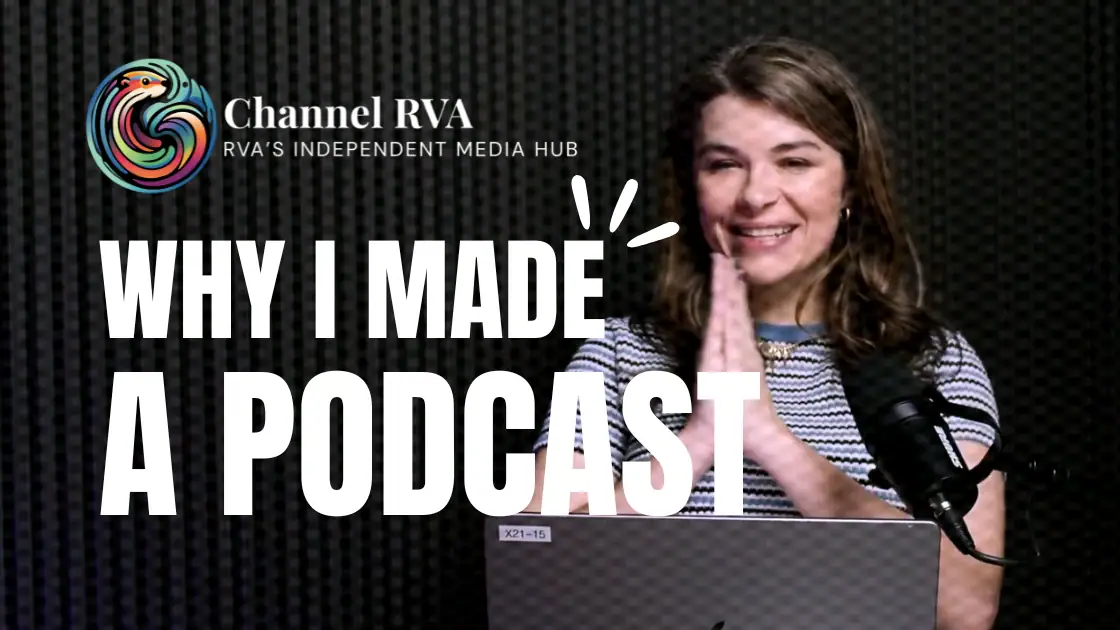
TL;DR: I love social media, working on it, and the City of Richmond. I made a podcast to talk to people who feel the same way.
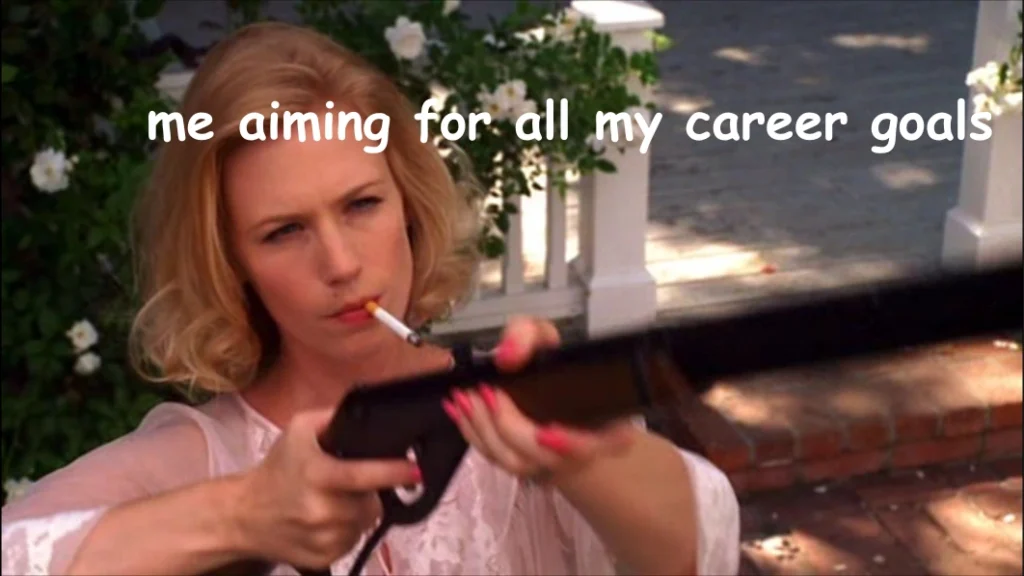
Almost 12 years ago, I moved to Richmond to attend the Robertson School of Communications at VCU. Ever since I watched Mad Men in high school, I knew advertising was the career field I wanted to get into.
Inspired by Mad Men and RVA
It wasn’t about the whiskey at work or brainstorming over cigarettes for me (though I’d love to time-travel back to that era) – what appealed most to me was the creativity that I could bring to work every single day. It was about understanding how people thought, what motivated them to want to buy/try things, and making beautiful things for the internet and reality.
VCU being in the heart of Richmond made that discovery of creativity and beauty easy for me. 12 years later, I’m still here, still trying new things in the city, still making new connections and loving the old ones that make my life here so great.
And as most college grads dream of, I’m working in a job that directly draws from my college education. I’m incredibly grateful and lucky. But there’s a part of me that believes that even though I happily suffer from lucky girl syndrome, you make your own luck in life.
Part of how you do that, in my experience, is seeking out what calls to you. It’s as simple as that: finding yourself, finding your people, finding your happiness. If you’re attracted to something – an idea, a type of music, a style, whatever it may be – go after it however you can, whenever you can, as often as possible.
And in a world where we’re all attached to the Black Mirror in our pockets, we can make the most of that dystopian feeling of being always on. Simply shift your mindset to feel less burnt out. Turn on to what fuels you. Remember that there’s always something new around the corner, and something really incredible could come from that next scroll, that DM to someone you admire, or simply showing up to do something new.
How Richmond’s Ad Community Launched My Career
This is where the lucky girl syndrome really kicks in. By opening myself up to new experiences, I’ve made incredible memories and friendships in the city I now call home. When I was at VCU, I participated in CreateAThon, which led to me getting hooked up with the VCU Ad Club, and then I went on to serve on the board of the Richmond Ad Club for almost 4 years. Before that, I was fortunate to be recognized with their Women in Advertising scholarship. In my acceptance speech, I quoted my favorite ad man, Don Draper.
If you don’t like what’s being said, change the conversation.
I give you this preamble because honestly, it’s a huge part of who I am. All of these things, as well as my continued work with Podium RVA, really launched my career. I got to know the Xponent21 team and am in the job I’m in today because of their own work recreating the Podium website.
Before I started working here, a lot of my work was largely based in design and social media. These are two highly undervalued pieces of the marketing process – trained social media managers like myself are often doing both and hearing that they’re not important, despite the time it takes to get these things done, and done well.
How Social Media Stopped Being Social
Social media in particular is generally disparaged yet praised as incredibly important at face value, at work and in our personal lives. And frankly, I can understand why. There are extreme impacts on mental health due to bullying, comparison, sedentary behavior, sleep disruption, and general anxiety. That’s not even mentioning disinformation and fake news. MIT reported in 2017 (nearly a decade ago, woah) that fake news spreads significantly faster online than it does in broadcast media, and by 2026, we’ve all seen it. Fake celebrity deaths, videos from one tragedy paired with another travesty happening across the world, rumors, unfounded conspiracies, gossip – to say it straight, it makes what’s on our screens absolutely suck. It’s easy to feel down about how social media impacts our world and individual worldviews.
And then I remember: If you don’t like what’s being said, change the conversation.
Social media can do a lot of good. Revolutions aside, there’s a lot of power in everyday locality. Being part of a community, locally or online or as a hybrid of both, is part of what makes people feel positive about their life. It makes you feel like you belong and have something to be excited about. Whether you realize it or not, that post your friend shared about a great dish they had at a restaurant down the street from you, that activates something in your mind. A positive sentiment, a connection to your surroundings, and maybe a little hunger.
And of course, in today’s age, there are the people who feel like your friends – yet you’ve never even met. Parasocial relationships are strong, and as much as they can have negative effects (please don’t be delusional), they can be really inspiring too.
As much as I love creating the social media presence for brands, I think the tipping point came when organizations took too much advantage of the social gaming aspect of these platforms. It became more about profit than people. It became about where to target people’s weak spots, about how to make us feel like we have simultaneously never had an original thought and need to conform to groupthink. Yet it also made us feel as though we are all alone, or set apart as a different kind of person than someone who would read their news on another platform.
I’d like to transport you back to a simpler era for social media. There was a time when Instagram actually guided you through its timeline before signaling that “you’re all caught up.” These days, we’re trapped in an infinite feed – not the serene, babbling brook you’d find in nature, but the relentless digital stream we navigate daily. As this landscape has transformed, the polish and production value have skyrocketed, yet everything feels strangely less human. It’s no longer social, it’s interest media. It’s a byproduct of a world where nearly anything, even entertainment and lifestyle choices, can be manufactured and sold to us.
Returning to Nature, Returning Home: The Power of Local
As someone who clearly loves Richmond, advertising, and social media, I have to work for that mindset I mentioned earlier. I have to focus on the good to avoid getting bogged down by the bad. I do that by connecting with people who light me up and get my passion going in work and at play.
When my CEO Will Melton decided to go all in on our new office space in Richmond, he built a podcast studio inside of it: West Broad Studios. Before, we filmed our own marketing content at Common House (now No. 303 Richmond). Now we have a production home of our own. This made it easy for Will to continue the America’s Healthiest City podcast and for Xponent21 to launch our very own, To The Power of X. With these projects, we’re more concerned about the information we get out there than we are with follower growth (which is not a metric that should concern anyone nearly as much in 2026). But of course, we are a marketing agency, so we care about getting the word out to as many people as we can. And what better way to do that than tap into the people who were building their own organic following online with locals?
The Making of Channel RVA’s Original Podcast Series: Creator Spotlight
That’s why I had the idea to launch the Creator Spotlight podcast. There are so many creators in the River City, bringing us back to the greatest things about living here. Community, culture, food, art, music, fashion – it’s what makes life worth living to a creative person like myself.
So with my social media manager hat on, I began to look for the creators I most wanted on the show: the ones I knew personally, those I admired, those who had inspired my friends. We began filming in April 2026, and now as we come into summertime, I’ve got a backlog of episodes to release.
Our first episode was with Bria of RVA Eats, who reached out to us originally because of a viral post I made for Richmond Water. We filmed some content together to promote the Richmond Water refill station, so I knew she’d be an incredible first guest to talk to about her journey of creating a food vlog on her own timeline and terms. I’m very happy to say that I was right – we had a great conversation that can now be watched on Channel RVA and YouTube; and listened to on Spotify and Apple Podcasts.
I’m looking forward to recording and releasing new episodes soon – so far, I’ve sat down with a fashion model, one of Richmond’s top followed event influencers, a music photographer turned sober community organizer, an EDM creator, a violinist turned podcaster, and even an ordained shamanic minister. Not necessarily in that order though – so you’ll have to subscribe to see who’s next.
Do you or someone you know love Richmond and love making content? Hit me up. I’d love to have you on the show and talk about why you love what you do and where you do it too.
Let’s change the conversation about social, together, and make something great.

Kayleigh Crandell
Kayleigh Crandell is a dynamic marketing professional with a passion for project coordination, creative storytelling, and community engagement. As Marketing Projects Coordinator at Xponent21, she leads initiatives across content, SEO, social media, and creative campaigns, collaborating closely with clients and internal teams to deliver outstanding results.