By: Will Melton
Published Date: October 31, 2026
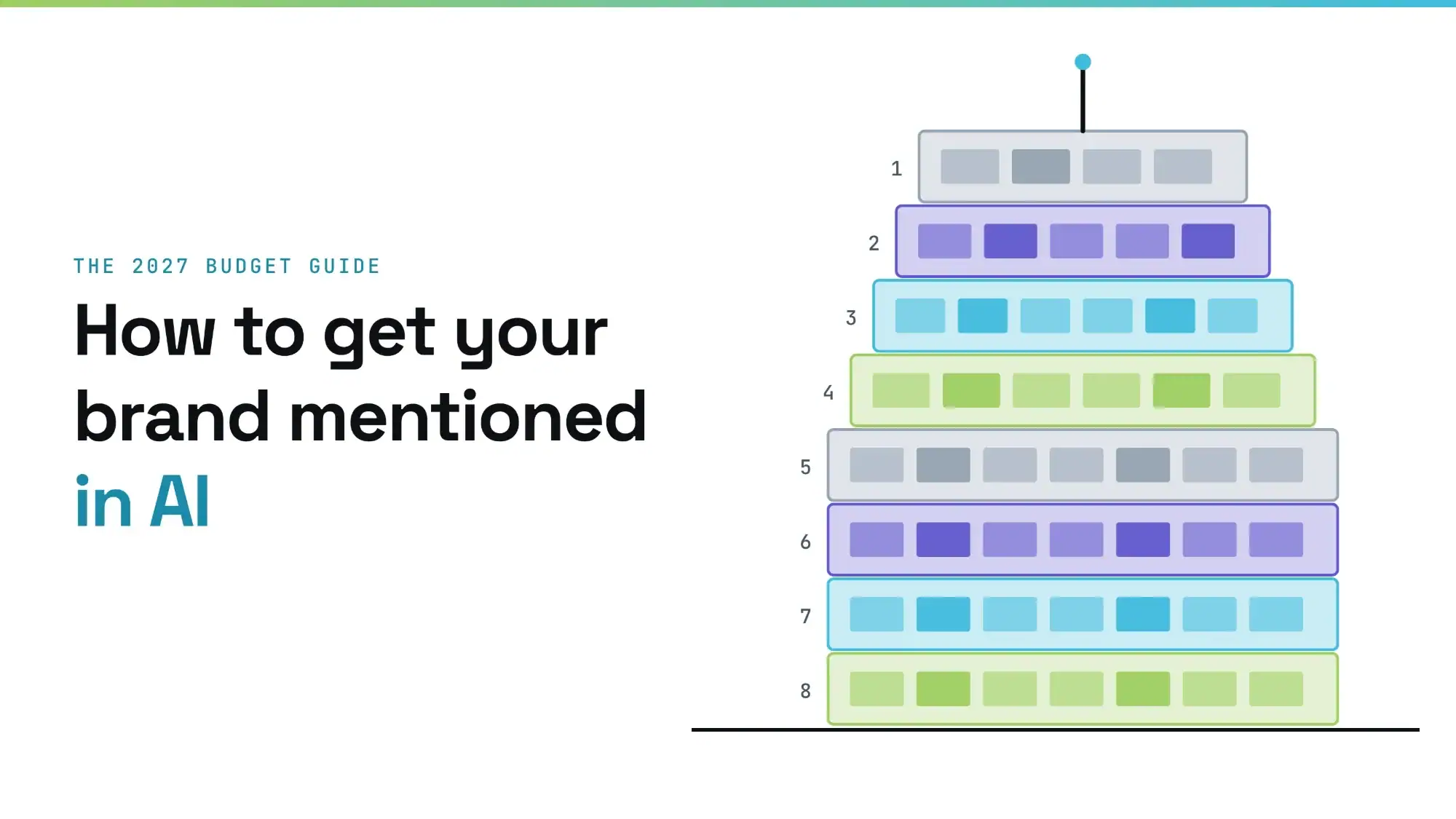
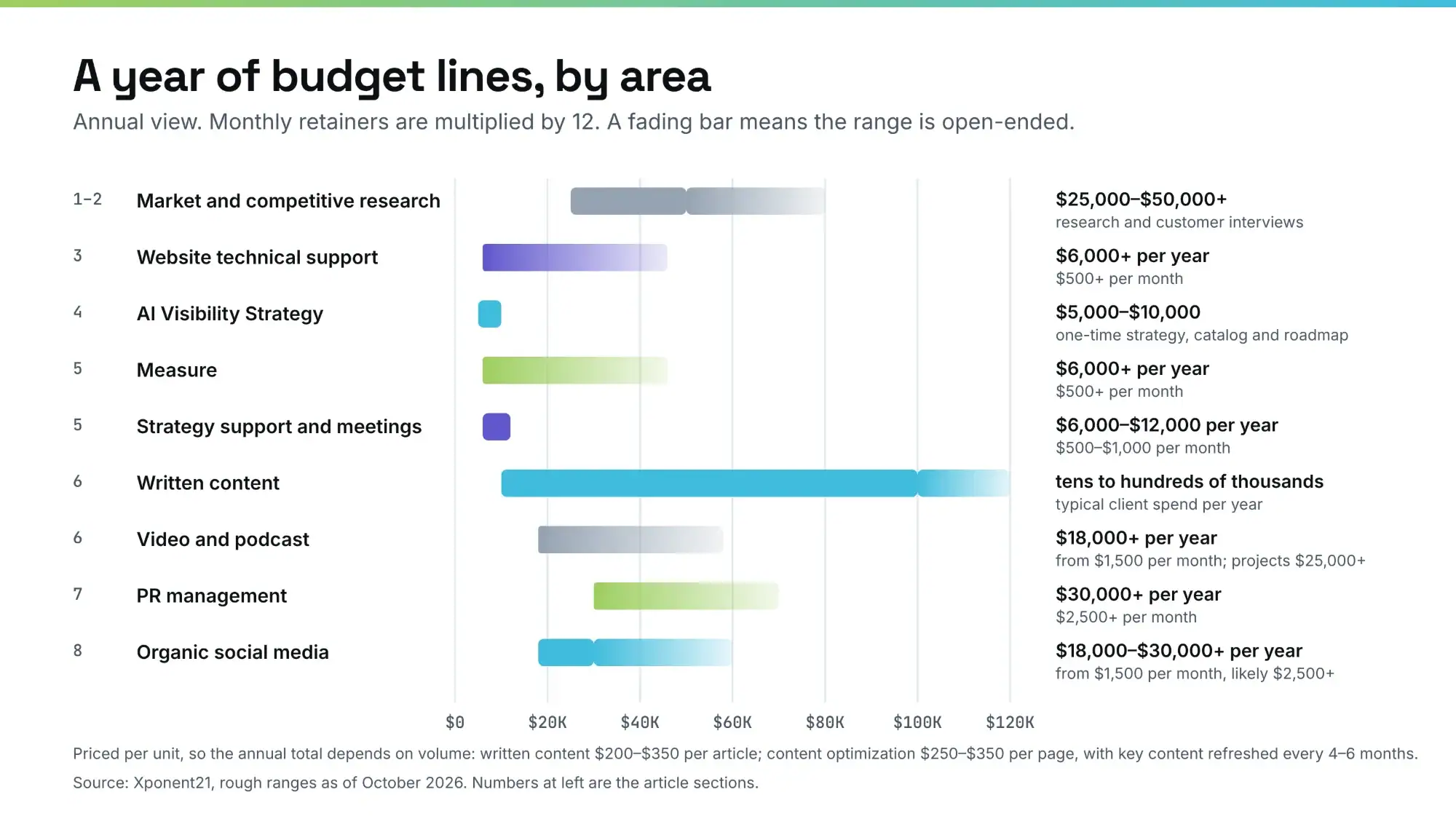
TL;DR: To get your brand mentioned in AI, budget for eight things: clarity of your strategy, clarity of your message, foundations, presence, measurement, content production, authority building, and customer content. Rough price ranges for each are in the table below.
The internet has changed a lot in the last two years. Strategy hasn’t changed much.
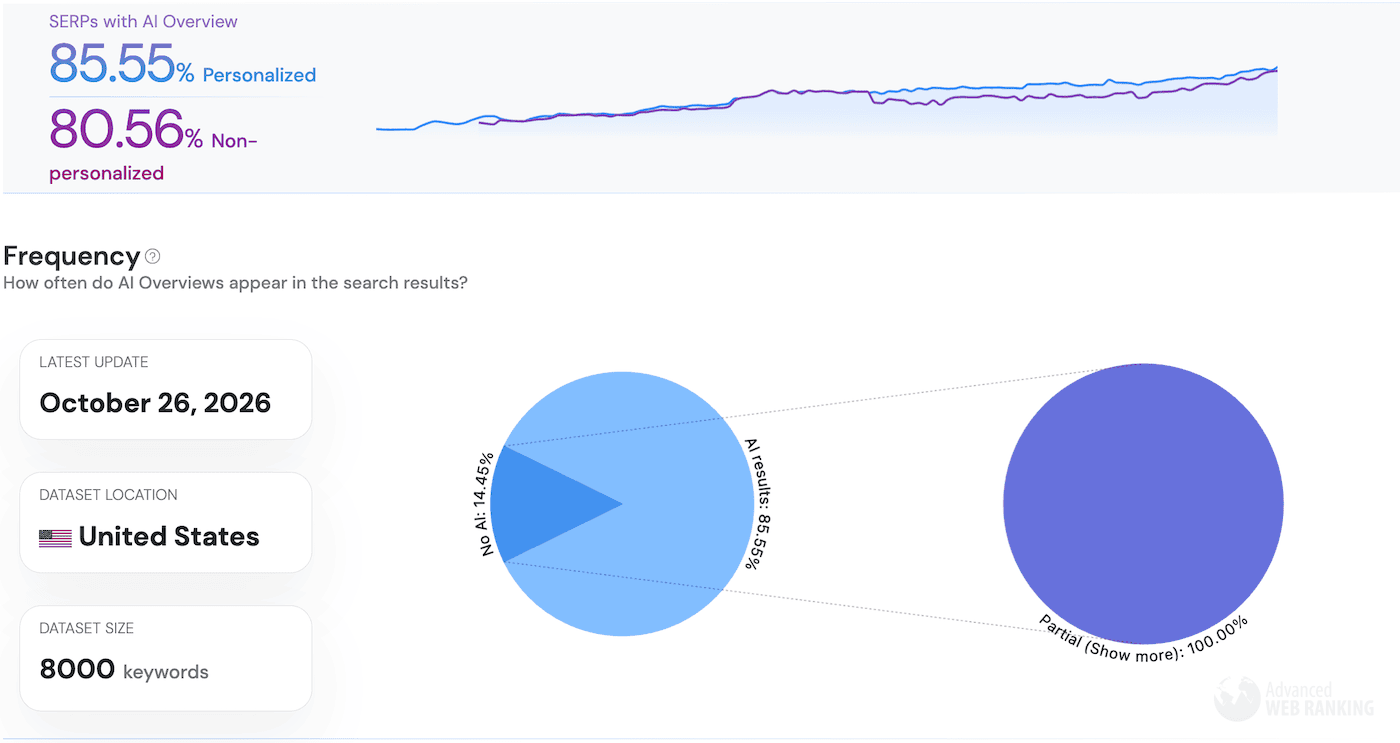
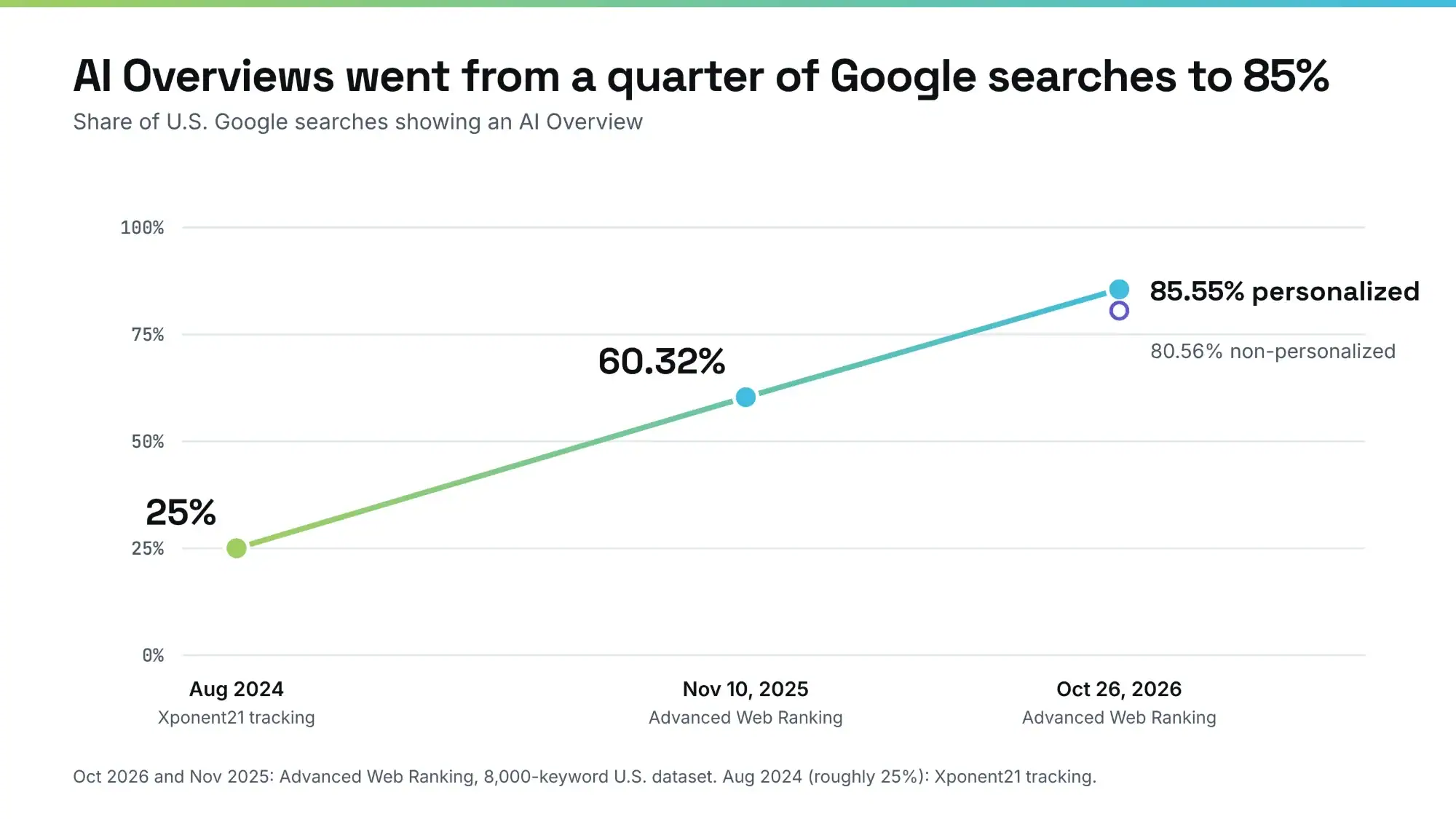
When we first started writing on this topic, roughly 25% of Google searches had AI Overviews in them. Today, 85% do.
Customers have thousands of questions. Don’t underestimate the work it takes to answer them, or to keep those answers up to date.
Here is what brands need to budget for to win:
- Clarity of your strategy
- Clarity of your message
- Foundations
- Presence
- Measure
- Content production
- Authority building
- Customer content
Looking for the tactics behind each of these? Read How to Get Mentioned and Cited in AI Answers. If you would rather start from the money you already spend, read How to Hack Your Existing Marketing Budget to Win Visibility in AI Search. To see how this number climbed, read Google Just Crossed 80% AI Overviews. Here’s Why That Should Change How You Think About Your Website.
What to Budget: Rough Ranges
These are the rough ranges for each line item. The sections below explain what each one buys.
| Line item | Rough range | Covered in |
|---|---|---|
| Market and Competitive Research | ~$25,000–$50,000 or more, depending on volume of interviews and subsequent deliverables | Sections 1 and 2 |
| Website Optimization Technical Support | ~$500+ per month, depending on your technology | Section 3 |
| AI Visibility Strategy | ~$5,000–$10,000; should include a content catalog, content strategy, and content roadmap with dozens or hundreds of suggested topics | Section 4 |
| Ongoing Content Optimization | $250–$350 per page, depending on volume of changes required and content depth; refresh key content every 4–6 months | Section 4 |
| Measure | $500+ per month, depending on keyword volume; CARL Intelligence is free to Xponent21 clients on retainer | Section 5 |
| Ongoing strategy support and meetings | ~$500–$1,000 per month | Section 5 |
| Ongoing Written Content Publication | $200–$350 per article; clients typically spend tens of thousands, and often hundreds of thousands, per year | Section 6 |
| Video and Podcast Production and Distribution | As little as $1,500 per month; production-quality projects $25,000 or more | Section 6 |
| Ongoing PR Management | $2,500+ per month is typical for PR retainers | Section 7 |
| Organic Social Media Management | As little as $1,500 per month, likely more than $2,500 per month; on top of video and graphic production | Section 8 |
Source: Xponent21, rough ranges as of October 2026.
1. Clarity of Your Strategy
Who are your ideal customers? If you try to be everyone for everybody, you’re going to spread your content too thinly across too many topics and targets. Get narrow on your focus to have the greatest impact.
A competitive analysis and marketplace assessment can help determine where opportunities might reside. Stakeholder interviews and internal surveys yield added insights to shape the strategy.
What to budget: Market and Competitive Research, ~$25,000–$50,000 or more, depending on the volume of interviews and subsequent deliverables.
Related: Marketing Strategy & Consulting
2. Clarity of Your Message
You know who your customers are. Now it’s time to define how you’re going to communicate with them. But what do they care about?
A lot is changing. Customers (B2B, B2C and B2G) are all shifting their discovery and buying habits. Many are leveraging AI agents to conduct research, perform vendor outreach, and even make purchases on behalf of customers.
You have to talk to your customers to understand their behaviors, their research habits, their AI tooling, their business strategy, their needs, their preferences, their anxieties and fears, and so much more. This work should be done with some regularity to ensure your message stays aligned.
After talking to customers comes the deep work of defining the key positioning language to use when talking to customers, in blog posts, on social, in videos, in podcasts and anywhere else you share your message. The memorable message is the one that will resonate.
See how this looked for Weidmuller USA: customer interviews, a competitor messaging audit and a SWOT analysis ended in a positioning statement, an elevator pitch and tiered sub-messaging.
What to budget: Customer interviews are part of the Market and Competitive Research line in section 1, ~$25,000–$50,000 or more, depending on the volume of interviews and subsequent deliverables.
3. Foundations
Your website must be technically sound and meet ALL SEO best practices. The same rules apply: speed, security, markup, link structure, UX considerations. Don’t skip this.
Ensure your website is a place people want to spend time if they do land there, because if someone ends up on your website, they are very likely near the decision phase of their discovery journey.
Can search engine crawlers and AI agents see the content on your website?
What to budget: Website Optimization Technical Support, ~$500+ per month, depending on your technology.
Related: Focus on Technical SEO Factors to Appeal to AI Crawlers, WordPress Support, Website Design & Development
4. Presence
Where do you need to be online in order to show up in AI?
First, your website is the key to it all. It MUST be the source of truth, and the information there needs to be helpful and accurate. It needs to be updated over time to ensure that stays true. It needs to change to reflect shifting customer preferences, and it needs to change to reflect the realities of a dynamic world.
You have to answer the most valuable questions your ideal customers are asking. You have to leverage your research from the clarity phase to ensure your message addresses key concerns and provides a pathway that builds trust and confidence in your prospects.
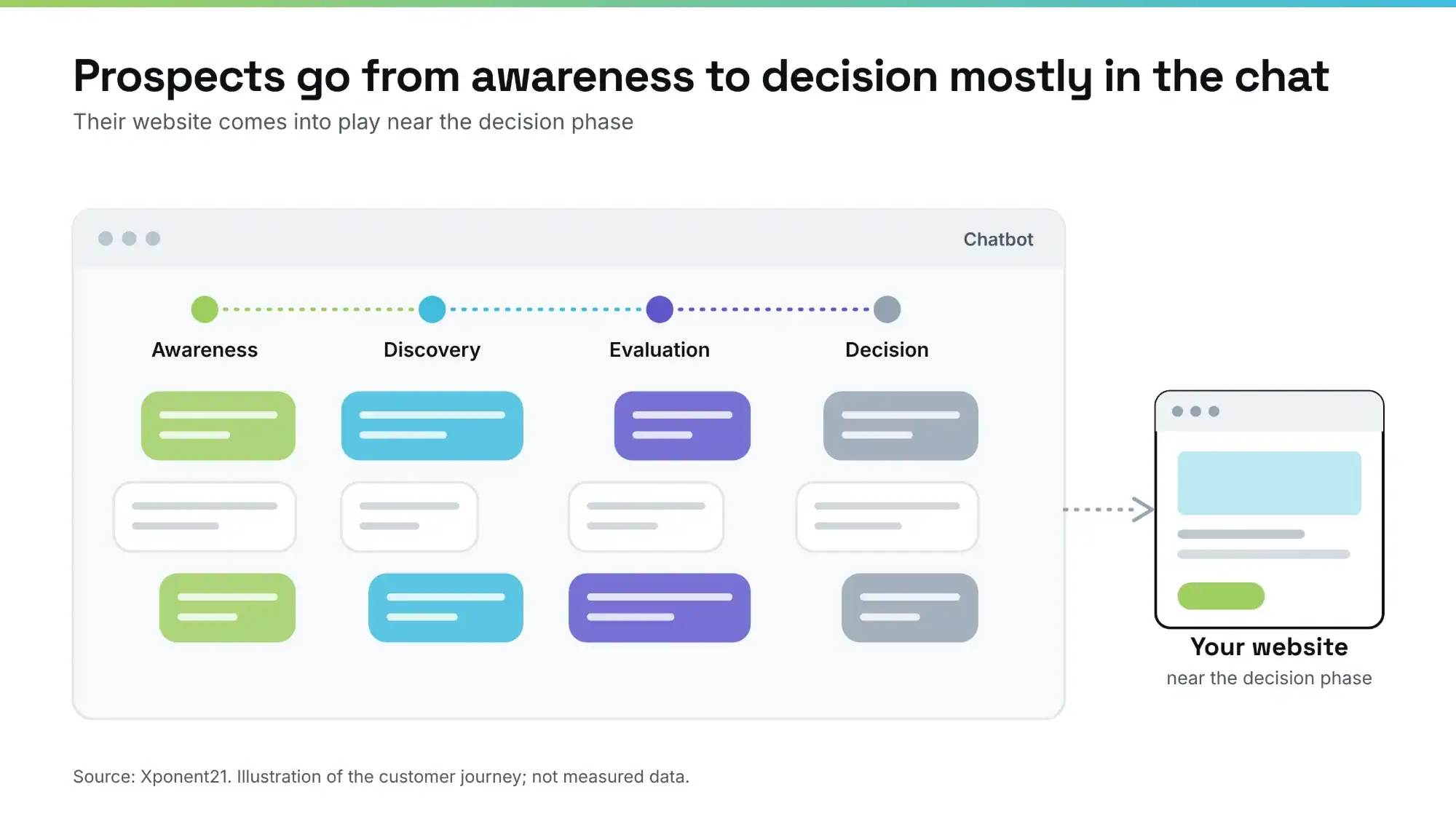
You need to maintain that trust over a multi-question discovery journey with their chatbot, as they go from awareness, to discovery, to evaluation, to decision, mostly in the chat, rarely visiting websites until they are near the decision phase.
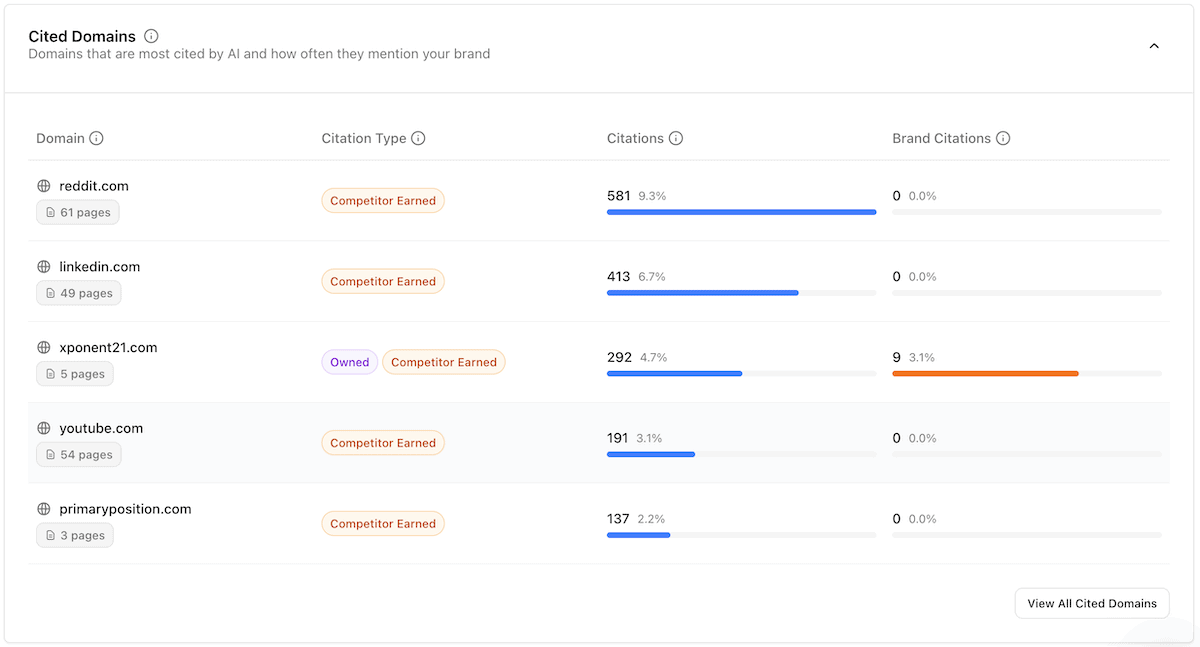
You also have to leverage research from the strategy phase to understand which sources AI is citing in pursuit of the prospects’ journey.
What to budget:
- AI Visibility Strategy, ~$5,000–$10,000. It should include a content catalog, a content strategy, and a content roadmap with dozens or hundreds of suggested topics to cover.
- Ongoing Content Optimization, across channels, with multiple pages optimized per month: $250–$350 per page, depending on volume of changes required and content depth. Key content should be refreshed every 4–6 months.
Related: What is AI Visibility Management?, Lessons From 100+ AI Overview Citations, Citations, Citations, Citations, What to Expect in Your First 90 Days of an AI Visibility Campaign
5. Measure
Start with a point-in-time analysis of your presence in AI results across frontier LLMs, ideally with Internet search on and Internet search off for full visibility of what AI is saying. Then check daily across key queries. Many companies will track hundreds if not thousands of queries.
Measure:
- Whether you are mentioned, cited, and recommended.
- Whether your competitors are mentioned, cited, or recommended.
- The sentiment of the responses.
- The source of the answer, from prompt to prompt.
CARL Intelligence, built by Xponent21, allows up to six months of free tracking to help people who are new to this understand where they stand. Xponent21 provides CARL Intelligence free to clients on retainer.
What to budget:
- Measure: $500 or more per month, depending on keyword volume.
- Ongoing strategy support and meetings: around $500–$1,000 per month.
Related: Xponent21 Launches CARL Intelligence, a Standalone AI Visibility Tool, CARL Intelligence, Peec AI vs. CARL Intelligence, Keyword Tracking Isn’t Enough Anymore | To the Power of X, Ep. 5
6. Content Production
Getting your message into the marketplace takes more than posting a blog.
- You need to answer customer questions publicly.
- You need to provide as much technical and comparison detail as possible.
- You need to help customers imagine your products or solutions being applied to their world.
- You need to produce videos, where you can leverage multi-media inputs for more effective recall.
- You need to get on podcasts or produce podcasts, where you can repeat your key messages, because AI repeats what it sees repeated across sources.
What to budget:
- Ongoing Written Content Publication: $200–$350 per article, depending on quality and length. Prepare to produce content at volume. It’s typical for clients to spend tens of thousands, if not hundreds of thousands, on content production each year to stay competitive.
- Video and Podcast Production and Distribution: varies based on quality. It could be as little as $1,500 per month for some video and podcast production. Production-quality projects could cost $25,000 or more.
Related: [AI SEO Case Study] One Shoot, 5 Videos, 2.1 Million Organic Impressions + AI Search Dominance, Does Having a YouTube Channel Drive AI Search Visibility?, Video Production, Podcast Production
7. Authority Building
Build your people: their credentials, their profiles, their bios, their work history, their interests, their qualities. Content gets named authors to build the credibility of content.
Partnerships with others in positions of authority on collaborative content projects further reinforce credibility with AI evaluators and human readers.
Press provides AI with another source of truth to help articulate the story.
Your own timeline of facts needs to be published and kept up to date to reinforce the facts you want AI to recite about your company or brand.
What to budget: Ongoing PR Management, $2,500+ per month is typical for PR retainers.
Related: What are E-E-A-T principles and why are they important for AI SEO?, Why Is Authority More Critical Than Ever in AI-Driven Search?, How We Lost 90 Percent of Our AI Search Visibility
8. Customer Content
What are your customers saying in reviews? Are you doing anything to influence what they might say?
From customer service to how you shape the ask for a review, you can control what customers say. What you say in response can also leverage your key positioning language to further reinforce what AI can understand.
Customer-posted social media content strategies are also key for shaping AI answers, as YouTube, Reddit, LinkedIn, Instagram, and Facebook are all common sources for AI answers.
Watch the part of the same episode on how customer complaints on Reddit shape AI visibility: To the Power of X, Ep. 5, starting at 16:23.
What to budget: Organic Social Media Management, on top of video production and graphic production efforts. It could cost as little as $1,500 per month for some social media management. It is likely to cost more than $2,500 per month.
Related: Social Media Management, How to Optimize Your Google Business Profile for AI Overviews
Proof: What This Looks Like in Practice
At our peak, Xponent21 was generating over 168,000 daily impressions in Google Search, with a consistent baseline around 90,000 impressions per day and multiple qualified leads arriving daily from organic AI search visibility. When we scaled back our own content program to focus on internal growth in early 2026, impressions fell from 70,000 to between 8,000 and 9,000 per day by March. We documented what happened in How We Lost 90 Percent of Our AI Search Visibility.
Source: Xponent21 Google Search Console data, as published in How to Get Mentioned and Cited in AI Answers.
| Client | Result | Case study |
|---|---|---|
| Energy Products Distribution (EPD) | Five FAQ videos from a single shoot generated 2.1 million organic impressions and 10,600 clicks, and all five ranked in Google AI Overviews and top search results | One Shoot, 5 Videos, 2.1 Million Organic Impressions |
| Pool Brokers USA | 4X increase in organic visibility and 52% lead growth | Pool Brokers USA SEO and AI Visibility Case Study |
| Comfort Heating & Air | Client-reported revenue up more than 50% year over year | Comfort Heating & Air Strategic AI SEO Case Study |
| ESP Window Tinting | +250% organic traffic and 4X form conversions | Elevating Visibility with Optimized Content for ESP Window Tinting |
| Cullom & Farah | 74% more organic form-submission leads year over year | Cullom & Farah SEO Case Study |
| Well-Trained Mind Academy | Hit stretch enrollment goal of 90% capacity, two weeks early | Well-Trained Mind Academy SEO Case Study |
| Weidmuller USA | Messaging platform with a positioning statement, an elevator pitch, and tiered sub-messaging | Weidmuller Messaging Case Study |
| Xponent21 | 4,162% traffic growth | AI SEO Case Study: Xponent21’s 4,162% Traffic Growth |
Source: results as listed on xponent21.com and in each linked case study.
Frequently Asked Questions
How much does it cost to get your brand mentioned in AI?
Budget lines run from ~$500+ per month for technical support and measurement to ~$25,000–$50,000 or more for market and competitive research. Written content runs $200–$350 per article, and it’s typical for clients to spend tens of thousands, if not hundreds of thousands, on content production each year to stay competitive. The full ranges are in the table above.
What should you budget for first?
Clarity of your strategy. Who are your ideal customers? If you try to be everyone for everybody, you’re going to spread your content too thinly across too many topics and targets. A competitive analysis and marketplace assessment, stakeholder interviews, and internal surveys help determine where opportunities might reside.
Why does getting mentioned in AI take so much content?
Customers have thousands of questions. You need to answer them publicly, provide as much technical and comparison detail as possible, and keep those answers up to date.
Does your website still matter if people research in a chatbot?
Yes. Your website is the key to it all, and it MUST be the source of truth. Prospects go from awareness, to discovery, to evaluation, to decision mostly in the chat, rarely visiting websites until they are near the decision phase. If someone ends up on your website, they are very likely near the decision phase.
How often should you check your results in AI?
Generally a daily check across key queries. Many companies will track hundreds if not thousands of queries.
How often should content be refreshed?
Key content should be refreshed every 4–6 months.
Why do podcasts and video matter for AI visibility?
AI repeats what it sees repeated across sources. Podcasts give you a place to repeat your key messages, and videos let you leverage multi-media inputs for more effective recall.
Is CARL Intelligence free?
CARL Intelligence, built by Xponent21, allows up to six months of free tracking to help people who are new to this understand where they stand. Xponent21 provides it free to clients on retainer. Measuring can cost $500 or more per month, depending on keyword volume.
Work With Xponent21
If you want help working out which of these budget lines matter most for your brand, schedule a call.
Watch more episodes of To the Power of X.
About the author: Will Melton is CEO of Xponent21, founder of AI Ready RVA, and an instructor at the University of Richmond. He has been recognized among Virginia Business Magazine’s 100 People to Meet for 2025 and Style Weekly’s Top 40 Under 40. View full bio.

Will Melton
Will Melton, CEO of Xponent21 and consultant to global companies, brings nearly 20 years of leadership in technology and marketing. He is the founder of AI Ready RVA and Richmond Water, podcast host for Channel RVA, and serves on several charitable boards in Richmond, VA. Recognized as one of the world’s top experts on AI SEO, Will was one of the earliest adopters or AI visibility and has pioneered strategies that have achieved top citations across Google AI Overviews, ChatGPT, Claude, and Perplexity, making him a global authority on the future of search.