
Marketing
How to Optimize for Agentic Ecommerce and Capture AI Purchasing Agents
By: Courtney Turrin
Published Date: November 11, 2026
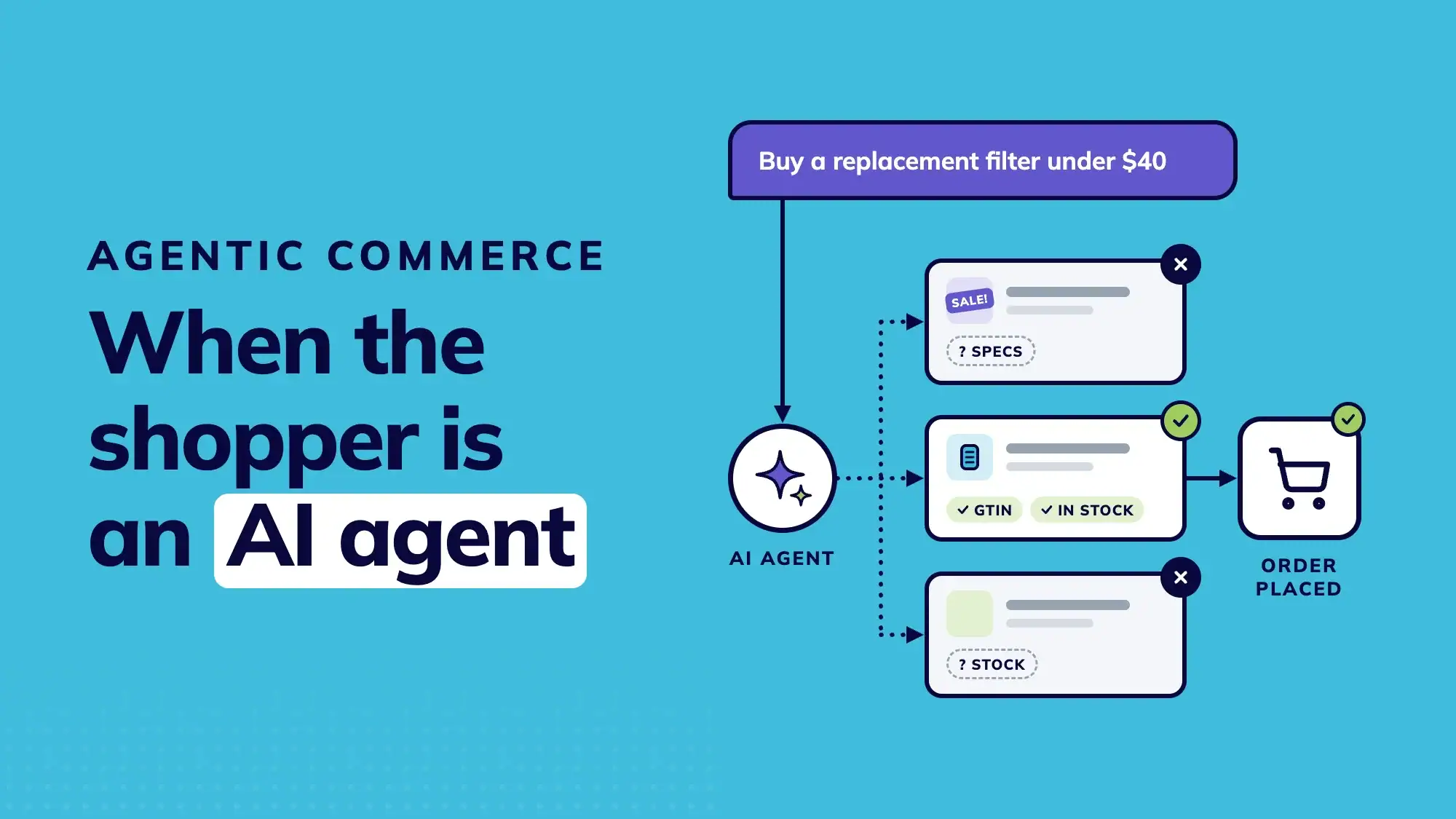
Autonomous software agents are beginning to browse, evaluate, and purchase products on behalf of consumers. Agentic ecommerce shifts online retail from visual merchandising designed for human attention to structured, programmatic verification built for machine intelligence. Online retailers that align their technical architecture, catalog data feeds, and commercial policies with the deterministic requirements of AI shopping agents will capture a substantial share of non-human retail transactions.
What Is Agentic Ecommerce?
Agentic ecommerce is the exchange of goods and services directed, negotiated, or executed by autonomous AI agents acting with delegated purchasing authority. Unlike assistive recommendation engines that merely suggest links for a shopper to click, an autonomous agent receives an objective from a consumer, interprets high-level constraints, and independently navigates the market to complete the transaction.
A consumer might instruct a conversational agent in ChatGPT, Perplexity, Claude, or Gemini to find a specific replacement component that matches their existing equipment, verify immediate delivery compatibility, and purchase it under a set price limit. To fulfill this instruction, the agent breaks the goal into discrete operational subtasks. It queries the broader web, retrieves structured merchant records, validates technical specifications across candidate items, and resolves discrepancies between product descriptions and actual inventory reality.
The market scale of this transition is substantial. McKinsey projects that the global agentic commerce opportunity could reach $3 trillion to $5 trillion by 2030. While long-term adoption trajectories will vary across consumer categories, this projection underscores that delegating checkout tasks to software is a structural evolution in transaction volume. As autonomous agents take on routine replenishment and complex attribute research, merchants must ensure their product ecosystems can be evaluated and transacted by non-human systems.
Why Traditional Ecommerce SEO Fails to Capture AI Buying Agents
Conventional search optimization for online retail centers on visual interfaces and human behavior. Retailers spend decades refining banner placements, emotional copywriting, urgency badges, and category page navigation to coax human shoppers down a conversion funnel.
Autonomous shopping agents do not respond to these emotional cues. When a buying agent lands on an online store, it strips away visual styling, suppresses promotional popups, and ignores layout aesthetics. Instead, it extracts machine-readable signals. If an ecommerce site relies on promotional graphics to convey bundle details, hides compatibility tables behind unindexed client-side scripts, or uses ambiguous stock statuses, the agent cannot parse the reality of the offer.
What a shopper sees
ONLY 2 LEFT!Breathe easier tonight.$34.99
Hassle-free returns · Fast shipping
What an AI agent reads
Machine-readable fields
- name
- HEPA filter, 2-pack
- gtin13
- 0012345678905
- price
- 34.99 USD
- availability
- not found
- ?
- compatibility
- not found
- ?
- returnPolicy
- not found
- ?
3 of 6 fields missing. The agent buys elsewhere.
The velocity of this behavioral change is already measurable across retail infrastructure. Signifyd reported that orders from AI agent referrals in its network increased by 1,247% year-over-year, tracking transactions measured from October 2024 to October 2025.
When traditional search engines direct a person to a storefront, that person can tolerate missing dimensions or deduce sizing from contextual images. An autonomous agent acts with strict fiduciary risk bounds set by its user. Faced with incomplete technical specifications or ambiguous pricing terms, the agent does not guess. It drops the non-conforming merchant from its consideration set and routes the order to an alternate supplier whose catalog yields complete, verifiable data.
Core Pillars: Optimizing Structured Product Data and Inventory Feeds for Agentic Commerce
Securing discovery and selection by AI buying engines requires rigorous feed fidelity and machine-readable data infrastructure. Retailers must treat product detail pages as structured API responses rather than visual advertisements.
Comprehensive Schema Architecture
JSON-LD Product schema is the foundation of machine extraction. Standard properties such as name, description, and image are insufficient for autonomous selection. Merchants must implement nested schema covering precise technical specifications:
- Global trade numbers: Provide explicit GTIN, MPN, and SKU identifiers to allow AI agents to match exact inventory across cross-retailer catalogs.
- Offers and inventory status: Detail exact price specifications, currency codes, price valid dates, and itemAvailability attributes linked to real-time inventory systems.
- Detailed attributes: Use additionalProperty arrays to declare physical measurements, materials, electrical ratings, compatibility requirements, and manufacturing origins.
<script type="application/ld+json">{ "@context": "https://schema.org", "@type": "Product", "name": "HEPA Replacement Filter, 2-Pack", "brand": { "@type": "Brand", "name": "ExampleBrand" }, "gtin13": "0012345678905", "mpn": "EB-HF200", "sku": "HF200-2PK", "additionalProperty": [ { "@type": "PropertyValue", "name": "Dimensions", "value": "10.2 x 8.1 x 1.5 in" }, { "@type": "PropertyValue", "name": "Filter material", "value": "H13 HEPA" }, { "@type": "PropertyValue", "name": "Compatible models", "value": "X200, X300" }, { "@type": "PropertyValue", "name": "Country of origin", "value": "US" } ], "offers": { "@type": "Offer", "price": 34.99, "priceCurrency": "USD", "priceValidUntil": "2027-06-30", "availability": "https://schema.org/InStock", "shippingDetails": { "@type": "OfferShippingDetails", "shippingRate": { "@type": "MonetaryAmount", "value": 0, "currency": "USD" }, "shippingDestination": { "@type": "DefinedRegion", "addressCountry": "US" }, "deliveryTime": { "@type": "ShippingDeliveryTime", "handlingTime": { "@type": "QuantitativeValue", "minValue": 0, "maxValue": 1, "unitCode": "DAY" }, "transitTime": { "@type": "QuantitativeValue", "minValue": 2, "maxValue": 4, "unitCode": "DAY" } } }, "hasMerchantReturnPolicy": { "@type": "MerchantReturnPolicy", "applicableCountry": "US", "returnPolicyCategory": "https://schema.org/MerchantReturnFiniteReturnWindow", "merchantReturnDays": 30, "returnMethod": "https://schema.org/ReturnByMail", "returnFees": "https://schema.org/FreeReturn", "refundType": "https://schema.org/FullRefund" }, "warranty": { "@type": "WarrantyPromise", "durationOfWarranty": { "@type": "QuantitativeValue", "value": 2, "unitCode": "ANN" } } }}</script>- 1Global trade numbers. GTIN, MPN and SKU let an agent match your product to the same item in other catalogs.
- 2Offer and inventory status. Exact price, currency, how long the price holds, and availability pulled from live inventory.
- 3Detailed attributes. Dimensions, materials, compatibility and origin as name/value pairs, not buried in images or tabs.
- 4Commercial terms. Shipping, returns and warranty as numbers an agent can compare. See the policies section below.
Dynamic Inventory and Variant Alignment
Autonomous agents abandon checkout sequences when surface data conflicts with transactional state. In an evaluation of 2,400 test purchases across 160 ecommerce websites conducted from August to October 2026, First Page Sage found that AI shopping agents failed to complete the order in 38.6% of attempts. Bot protection was the single largest cause of failure. Technical incompatibilities, missing product data, and checkout friction also accounted for many of these transactional dropouts.
Merchants must ensure that product variant matrices resolve cleanly in structured code. If an agent selects a blue jacket in size medium, the page data must update the SKU, pricing, and availability states deterministically. When an agent encounters ambiguous variant states or finds that a listed product is backordered only after triggering a cart event, it records an execution failure.
Establishing Clear Policies for Autonomous Checkout and Delegation
AI purchasing agents operate within programmatic rules regarding financial liability and risk. When selecting where to purchase, an agent evaluates the commercial terms of the transaction alongside product availability. If a merchant uses ambiguous language to describe shipping times or returns, the agent disqualifies the site to protect the buyer.
Online merchants must publish unambiguous, machine-parseable policy statements:
- Return policies: State the exact duration of the return window, whether return shipping is free or paid by the customer, and the concrete method of refund distribution. Mark this up with MerchantReturnPolicy schema.
- Shipping specifications: Detail transit times, handling windows, supported carrier networks, and flat or calculated shipping fees using OfferShippingDetails structured data.
- Warranty information: Document warranty duration, covered components, and claims processes directly within the product structured data markup.
When these policies are encoded in structured data, the buying agent can confirm compliance with the user’s constraints instantly. Vague phrases such as “hassle-free returns” or “prompt shipping” require conversational interpretation that introduces uncertainty. Clear numerical terms, declared in machine-readable formats, eliminate ambiguity and allow the agent to authorize the purchase.
The Integrated Approach: Building Authority for AI Search Discovery
Winning placement in conversational search tools requires establishing site authority across multiple channels. AI search platforms like ChatGPT, Claude, Gemini and Perplexity construct their recommendations by synthesizing structured catalogs with web-wide brand sentiment and citations.
According to research published by Xponent21, Google AI Overviews appear in over 85% of U.S. search results as of October 2026. This environment means conversational engines synthesize information across top-level search overviews, technical articles, and third-party reviews before deciding which brand to recommend.
An integrated approach to agentic commerce optimization links web design, technical SEO, and authoritative content into a unified signal:
- Web architecture: Build fast, server-rendered product catalog pages that allow search engine crawlers and autonomous scrapers to retrieve clean DOM elements without rendering heavy client-side scripts.
- Technical documentation: Publish educational guides, specification manuals, and video transcripts that clarify product applications, giving language models context about where your products excel.
- Multi-platform presence: Ensure external review platforms, trade coverage, and independent databases cite your brand accurately, establishing the third-party validation that conversational models demand before delegating purchases.
Preparing Your Online Store for the Future of Agentic Purchasing
Agentic ecommerce represents a shift toward automated commercial procurement. As buyers rely more heavily on autonomous assistants to handle their online shopping, the retailers that thrive will be those whose digital storefronts function as reliable, friction-free data endpoints.
Preparing your ecommerce business requires auditing your current catalog assets for programmatic accessibility. Remove intrusive modal scripts that block web agents from parsing page content, calibrate your product schemas to reflect exact physical specifications, and synchronize your catalog data with real-time warehouse inventory.
Navigating this transition requires technical precision and deep familiarity with AI discovery systems. Ambitious retail brands partner with Xponent21 to modernize their digital presence, align their data architecture with evolving AI search requirements, and build visibility across both conversational platforms and traditional search benchmarks. Connect with our team to audit your technical store infrastructure and prepare your digital catalog for autonomous AI buyers.

Courtney Turrin
As the company’s number two employee, Courtney has helped guide the direction of our business, build a powerhouse team, and implement technology and workflows to improve service delivery and produce outsized results for our clients. Her current role sits at the intersection of analytics, work management, and operations. Drawing on her background in scientific research, Courtney designs efficient processes and supports our teams so they can better serve our clients. She holds masters degrees in Biology and Psychology/Neuroscience from the College of William and Mary and Yale University, respectively. Offline, Courtney is a plant whisperer, Peloton enthusiast, and proud pet mom.