Marketing
OpenAI Is Testing a Search Console for ChatGPT: What It Shows and What It Doesn’t
By: Will Melton
Published Date: November 9, 2026
Modified Date: November 10, 2026
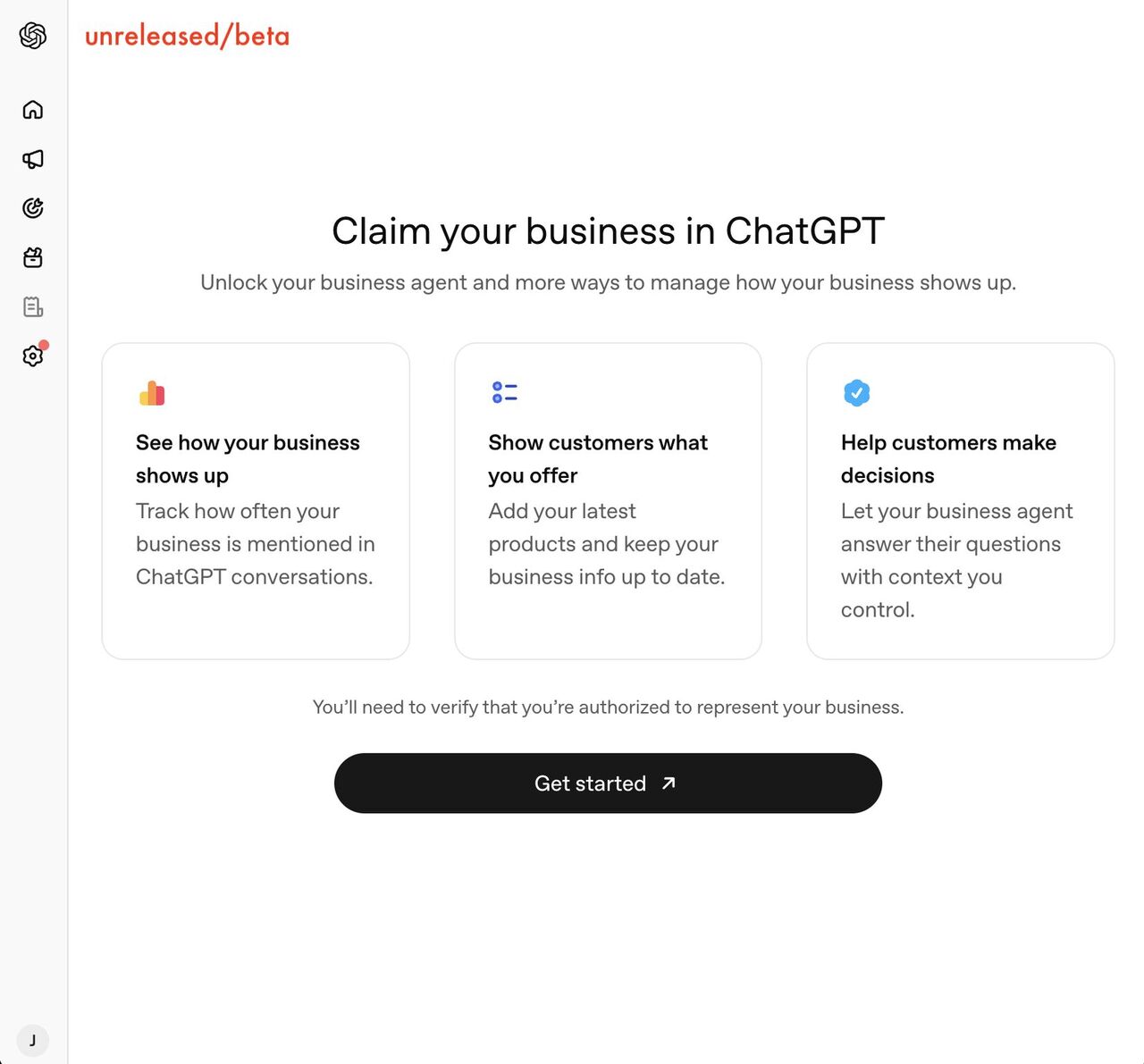
OpenAI appears to be testing a first-party “Claim your business in ChatGPT” tool, inside a larger Business Hub, that would show verified businesses how often ChatGPT mentions them; it is unreleased and OpenAI has not announced it. Evidence surfaced on November 6, 2026, in a screenshot posted by Juozas Kaziukenas of Marketplace Pulse.
Industry coverage from Search Engine Roundtable, Search Engine Land, and The State of AI reported the development. These reports indicate that OpenAI is testing direct brand verification and first-party citation tracking inside the platform.
For operators wondering how to track brand visibility in ChatGPT search, these reports describe what OpenAI is building, what the tool reveals, and what remains inaccessible to business owners.
What OpenAI Is Testing: “Claim Your Business in ChatGPT”
The reported interface points to an initial verification workflow rather than an open index. The screenshot showed an option to verify brand ownership by connecting a Shopify store.
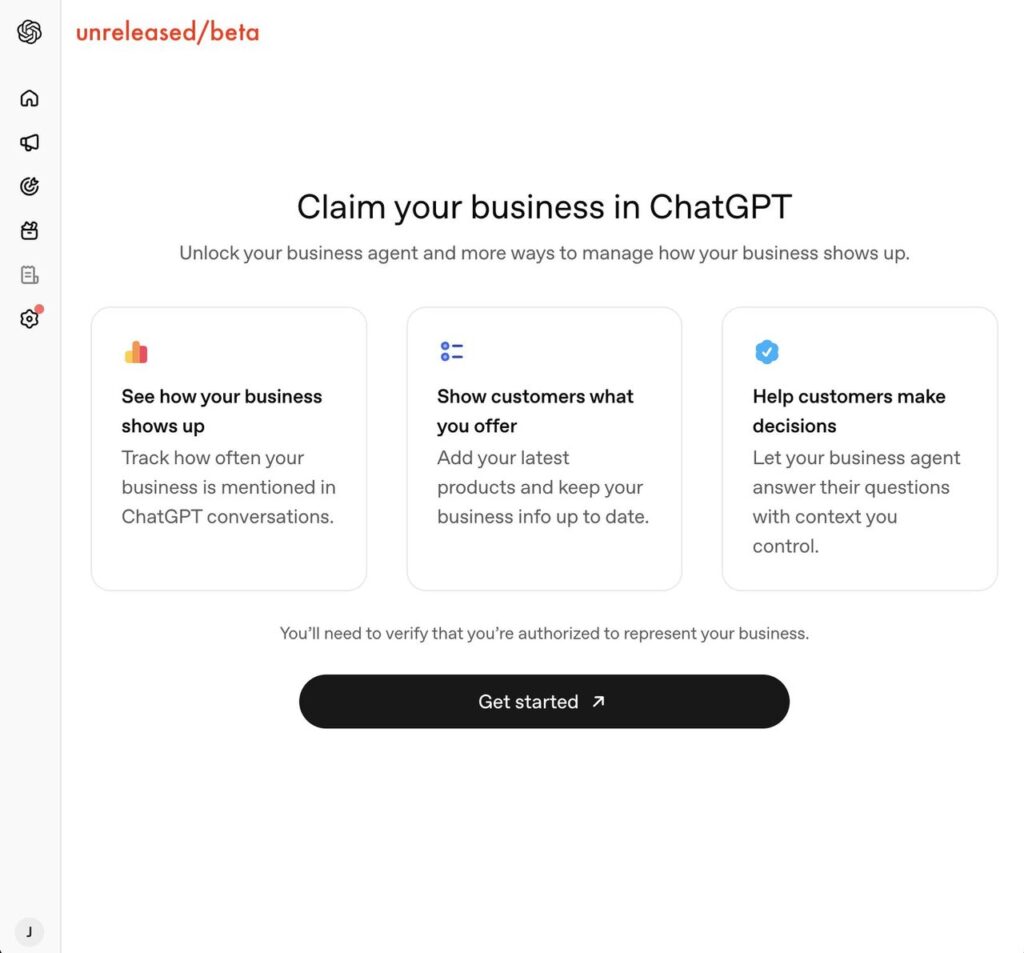
Only businesses that verified ownership can see the feature. Currently, OpenAI offers no public search console, no webmaster portal, and no published documentation outlining a standard business claiming process. Entity understanding across AI Search still relies primarily on how the model reads and synthesizes information across the open web. The reported tool represents an experimental first step toward direct entity claiming inside the platform.
Reports identify three primary functions for the tool:
- Track mentions in ChatGPT conversations
- Add products and keep business info current
- A business agent that answers customer questions with context the business controls
What the Reported Business Hub Tool Does
Based on the interface documented by Kaziukenas, the Business Hub surfaces aggregated visibility numbers. It displays aggregate totals for:
- Total brand mentions across conversations
- Impressions generated in search responses
- Clicks directed toward brand URLs
One report describes daily impression and click charts that track these aggregates across defined date ranges. ChatGPT search already adds utm_source=chatgpt.com to clicked links, so clicks already appear in web analytics, but there has been no first-party record of mentions that produce no click.
These top-line counts confirm whether the system cited an entity and presented it to an end user.
Who Can See It and What OpenAI Has Not Confirmed
The feature is not live for the general public, and OpenAI has made no formal announcement regarding its release date, availability, or commercial requirements.
Several critical elements remain unconfirmed:
- Availability: There is no self-serve portal where an operator can log in to claim a company profile today. Access is being tested and has not been publicly released.
- Verification methods: Beyond the Shopify connection seen in the reported interface, OpenAI has not documented other verification paths.
- Business eligibility: It remains unconfirmed which business categories or site types will have access to the Business Hub as testing continues.
Because the tool is unreleased and being tested, marketing teams cannot rely on this interface as an active component of their current reporting stack.
What ChatGPT Search Visibility Data Still Hides
The reported metrics track gross activity, but they omit diagnostic context.
According to the analysis by Kaziukenas, the reported tool shows:
- No prompt data: Business owners cannot see the underlying queries, prompt phrasing, or contextual questions that prompted the model to cite their company.
- No user data: The interface shows no user data, geographic location, or conversational follow-up patterns.
- No competitor benchmark or ranking: The system provides no comparative data showing which competing brands were cited in the same response or what position a brand held.
Top-line counts provide visibility into volume, but they do not show prompt phrasing. Tracking aggregate impressions without understanding prompt composition leaves teams without query context.

How to Systematically Track Your Brand Mentions in ChatGPT
Relying on platform-level dashboards alone rarely solves the measurement challenge in modern search engine optimization. While webmaster tools provide historical totals, understanding authority requires tracking prompt universes over time.
To systematically track brand mentions ChatGPT generates, brands monitor structured prompt sets rather than waiting for first-party aggregates. This approach models how real buyers ask questions, evaluating:
- Whether the brand is cited in competitive head-to-head queries
- Which external domains the model uses to validate the brand
- What specific position or ranking the brand occupies in multi-source answers
At Xponent21, this analysis is managed through CARL Intelligence, an AI visibility tracking platform developed to monitor citation share across major language models.

Rather than relying on static keyword lists, the platform evaluates a live, growing dataset built by the CARL Lab. This system runs scheduled scans across ChatGPT, Perplexity, Gemini, and Claude to observe citation movement.
Connecting prompt-level citation tracking directly to business decisions allows leadership teams to identify visibility gaps before organic traffic shifts. Instead of waiting for platform providers to release basic aggregate counts, measuring AI search visibility tracking through active prompt analysis ensures brands know exactly where they stand in generative engine results.

Will Melton
With nearly 20 years of experience leading businesses in technology and marketing, Will is passionate about helping companies worldwide harness their unique culture, dedication to service, and innovative solutions to outperform in the digital space. As a recognized expert in AI search and AI overviews, Will has developed cutting-edge strategies that not only elevate brands to the top of AI-driven search results but also transform the customer experience and drive business productivity. His talent for crafting modern brand strategies that deliver measurable impact, while pushing the boundaries of what's possible, is fueled by his relentless drive to see businesses succeed in the evolving digital landscape.