
By: Isaac Marcuson

Published Date: August 6, 2026
Modified Date: August 17, 2026
TL;DR: Ask Google’s AI Mode one question and it searches several related ones. They call this query fan-out. Many agencies and tool vendors answered by scaling content with a page per variation, but Google’s own documentation says that method isn’t effective. Instead, build one page per distinct question and answer its phrasings inside it.
One of your website’s pages holds position three in Google for the search term it was built to target. A buyer opens Google’s AI Mode and asks the same thing in slightly different words. The answer names three other companies. Your page is still indexed and still ranking, but they got the introduction.
For twenty years, holding a top position meant getting found. Now, AI search has created a new way to be found, and its users are increasing rapidly.
How Query Fan-Out Turns One Question Into Many
Google’s AI Mode searches beyond the exact question it’s asked. It generates a set of related questions and assembles the answer out of all of them.
Google calls this query fan-out. The term arrived with the AI Mode announcement in March 2025, and Liz Reid, Google’s Head of Search, explained the mechanism at Google I/O that May. The definition is a set of related queries the model generates to request more information. Reid’s post describes the system breaking a question into subtopics. Our read is that the sub-queries reach past phrasing into the angle of the question itself.

Chuck McCarthy, Xponent21’s Service Operations Lead, described the behavior in his own words on Episode 3 of To the Power of X, the agency’s podcast on AI and marketing. The model, he said, “fans out to a bunch of other questions that an expert would ask” (13:22).
The fan-out multiplies your question rather than replacing it, and the original search still runs alongside the new ones. The technique that replaces one question with another is query rewriting, a separate mechanism.
Why the Page-Per-Phrasing Fix Fails
Many agencies and tool vendors understand the mechanism, then treat every sub-query as a separate target. The advice circulates under the banner of Generative Engine Optimization (GEO), the practice of optimizing content to appear in AI-generated answers, and it usually arrives in three parts: a page for every fan-out query, the long page split so each sub-question gets its own URL, and the content cut into passages short enough to be retrieved alone.
Google published guidance on this, and it contradicts the page-per-variation advice. Its guide to optimizing for generative AI features says that creating separate content for every variation of how people might search, fan-out queries included, violates Google’s scaled content abuse spam policy when it is done primarily to manipulate rankings or AI responses. Even if not doing so to intentionally influence AI search results, the guide still calls the approach ineffective in the long run, because a high quantity of pages does not make a site more relevant. It sets no chunking requirement either, and tells publishers not to worry about whether they have captured every variation of how someone might search for their content.
The fan-out is happening. The leap from that mechanism to a page count is where some marketers diverge from best practices.
Splitting one question across its phrasings produces pages that all sit on the same topic and compete with each other for it, and it hands a reader the same thing several times. Covering distinct questions produces pages that each answer something different and point at each other, which is a content cluster.
A question is distinct when it carries different intent, different evidence, or a different decision, and a phrasing is the same question in other words.

We sell content production, which is exactly why that rule has to govern the AI search work we do. Undifferentiated volume is ineffective at best and a policy violation at worst.
The audience scrolls past content that reads like everything else, and the systems that assemble AI answers behave the same way. The common answer already exists across the web. Google’s guidance points at original information, experience, and analysis as what earns visibility in AI features, and an assistant gains nothing by naming the source of a paragraph it can find in a thousand places.
Tracking 78 Buyer Questions Across Four AI Assistants
Checking whether an assistant names you takes an instrument. The first instrument Xponent21 evaluated wasn’t ours. In June 2025, our CEO, Will Melton, wrote about a third-party browser tool that exposes the backend searches ChatGPT fires behind a prompt. His instinct was right, but analyzing single prompts one at a time isn’t sustainable, so we built our own instrument.
Xponent21 asks four AI assistants the same 78 buyer questions every day in CARL Intelligence. The set covers branded, local, category, comparison, and informational questions, written the way a buyer would actually phrase them. AI answers shift from day to day, so the only way to know where you stand is to keep asking.
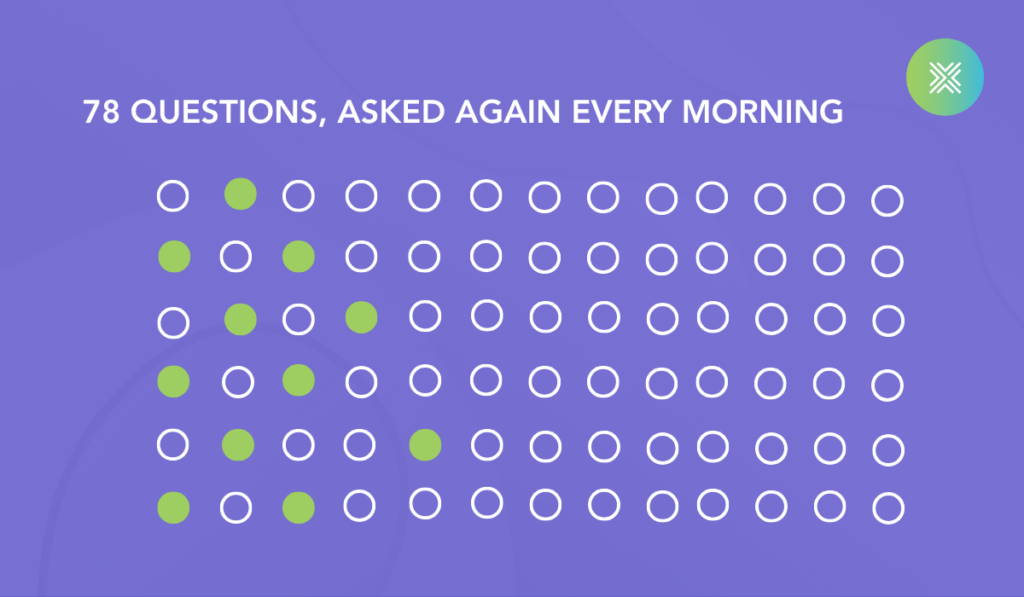
Most of the questions where we appear name Xponent21, a person, or a place. Richmond, Virginia shows up. Our people show up. As the question broadens toward generic informational and how-to phrasing, the set stops returning us and starts returning other people’s domains.
We read that pattern as the assistant naming a specific source it can credit the answer to. More phrasings give the assistant more text. Only a source gives it something to name.
A question that contains our name is asked by someone who already knows it. So part of what we are measuring is awareness the brand already has. Seventy-eight questions is also a small sample. The evidence provides direction, and that is all we are claiming.
Assistants differ in how much of their searching you can see. ChatGPT’s fired searches are capturable, demonstrated in our 2025 article. Google’s fan-out sub-queries stay hidden, and Google says plainly that no third-party tool has access to its internal ranking or AI systems. For Google, the measurable surface is Search Console’s own generative AI performance report. Our instrument works from the outside. We ask a question set and record whether we are named in what comes back.
Which is why the work starts one step earlier than the tooling suggests, with the questions that actually matter to your buyers.
Ranking Still Sets the Floor for AI Citation
In its July 2025 study, Ahrefs found that 76.1% of AI Overview citations came from pages ranking in the top ten. Its early-2026 study, run after Ahrefs improved its citation parsing, put that figure at 37.9%. Part of that drop is the methodology change. We read the rest as citations spreading beyond the top ten, the pattern a fan-out world would produce. In that same July study, 85.6% of AI Overview citations came from pages ranking somewhere in Google’s top 100.
Read together, they describe a floor, not a guarantee. Ranking puts a page within reach of the systems assembling the answer, and something else decides which page gets the introduction. Optimizing to rank in AI search results is where that floor gets built.
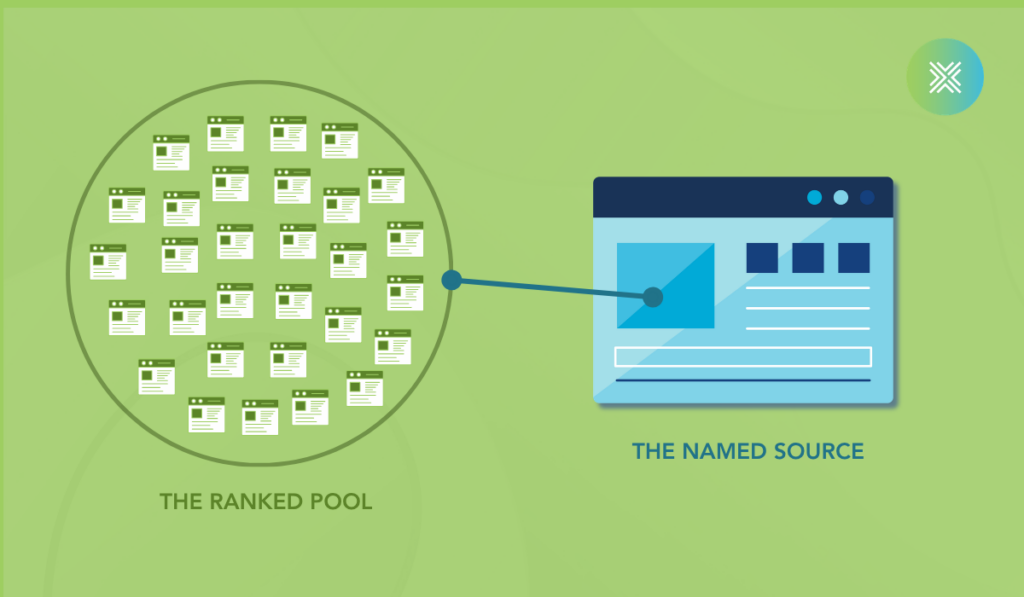
A page that genuinely answers a question does its work inside the assistant’s response. The buyer gets the answer and you get the attribution, whether or not they ever land on your site, what the industry calls “zero-click search.”
So think back to that page at position three. Another company got the introduction, but you can use this information to make your brand more visible. Document the distinct questions a buyer asks on that topic, find which ones the assistants currently answer with someone else’s name, and develop your content on the page already targeting those queries. This is the same approach we use with clients, and a first pass needs only your buyers’ questions and an afternoon. The page that wins is the one that answers more of the buyer’s questions on the topic it already holds.
Frequently Asked Questions About Query Fan-Out
What is query fan-out in Google’s AI Search?
Query fan-out is Google’s own term for a set of concurrent, related queries Google’s AI mode generates to request more information before answering. Read more.
Should I create a separate page for each query fan-out variation?
No. Google’s guide to optimizing for generative AI features addresses this directly. Creating separate content for every variation of how people might search, fan-out queries included, violates its scaled content abuse spam policy when done primarily to manipulate rankings or AI responses. Read more.
Why does a page that ranks on Google not appear in the AI answer?
Ranking makes a page eligible for AI citation. Selection for AI citation happens after a page is ranked and is ultimately based on different criteria than ranking. Read more.
How can I tell which questions AI assistants answer with my brand?
Ask the assistants the questions your buyers ask, on a schedule, and record whether your brand is named in the answer. That is direct observation, available to anyone willing to keep at it. Read more.
Does query fan-out mean keyword research no longer matters?
Keyword research still tells you what people want to know. Google’s documentation says its systems understand synonyms and the general meaning of what someone is seeking, which lets them connect a query to content that does not use the same precise words. Read more.

Isaac Marcuson
Isaac Marcuson is an AI SEO & Content Editor at Xponent21, a digital marketing agency in Richmond, Virginia, focused on AI search optimization. He runs the AI-assisted content systems behind the agency's work and edits what those systems produce. The job makes him a daily student of one question: why language models cite what they cite. Before Xponent21, he spent nearly eight years as a freelance digital strategist in finance, healthcare, e-commerce, and the skilled trades. Each defined expertise its own way. Trust had to be earned in the local dialect. Offline, Isaac reads philosophy, theology, and cognitive science, and walks the James River most days.